

INTRODUCING THE PERPETUAL TIMEKEEPER
A FUSION OF DESIGN, CRAFTSMANSHIP AND TECHNICAL INGENUITY: A BESPOKE SHOWCASE DURING MILAN DESIGN WEEK
KEY FACTS:
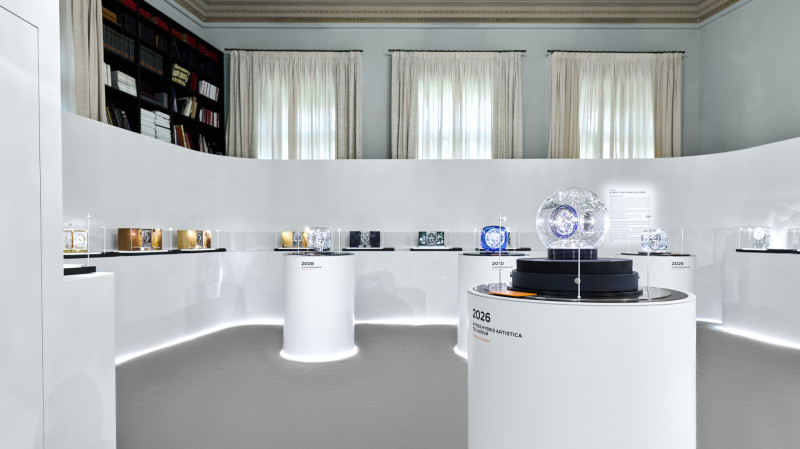
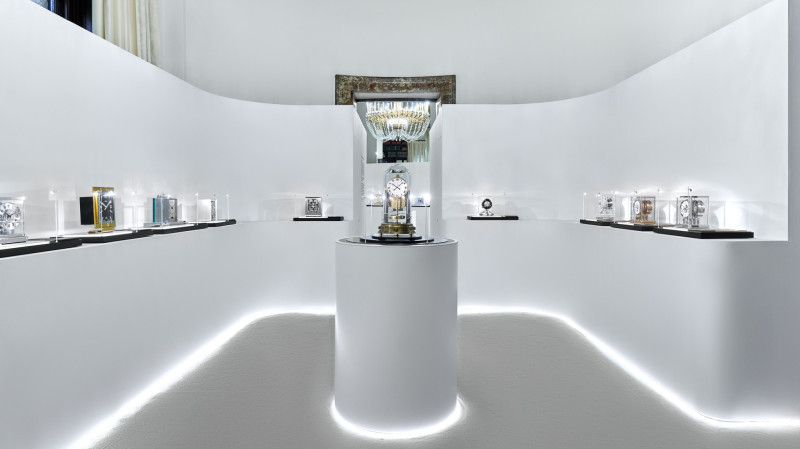
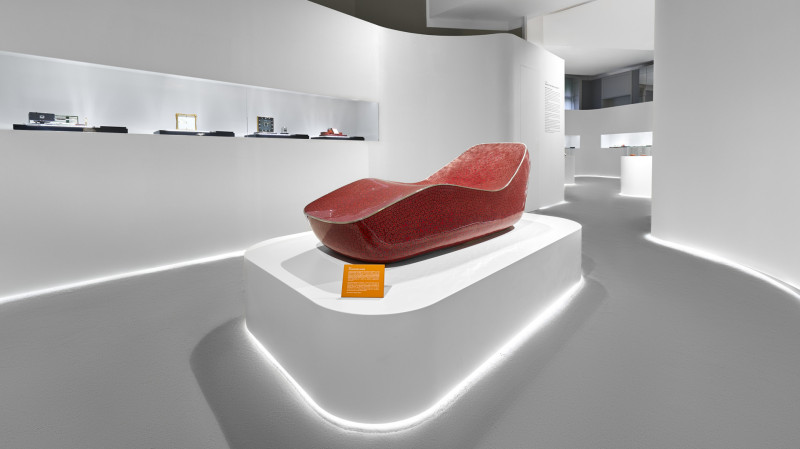
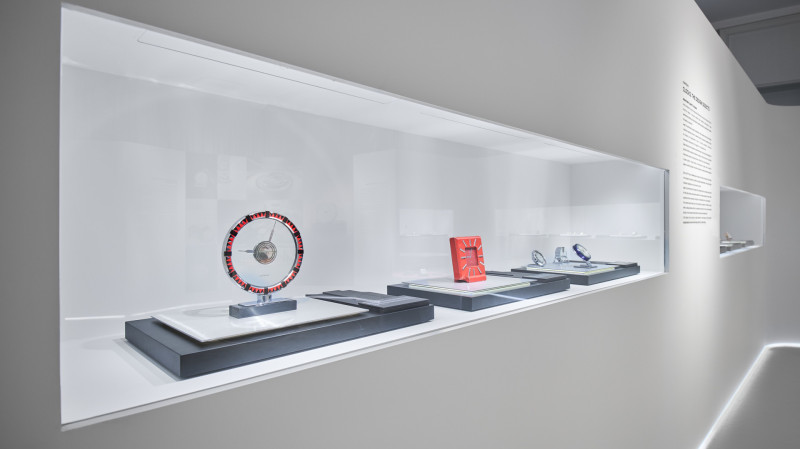
Exclusive Milan Design Week exhibition: an inspiring six-chapter showcase featuring 53 archive design-led timepieces and 32 Atmos clocks, spanning nine decades and the Marc Newson novelties
Creative collaboration with Marc Newson: exploring the enduring dialogue between timekeeping and design, continuing the long-standing partnership with the celebrated industrial designer, first initiated in 2008
State-of-the-art novelties: the unveiling of five new clocks, including three new designs by Marc Newson and two Atmos creations showcasing the Maison’s decorative crafts
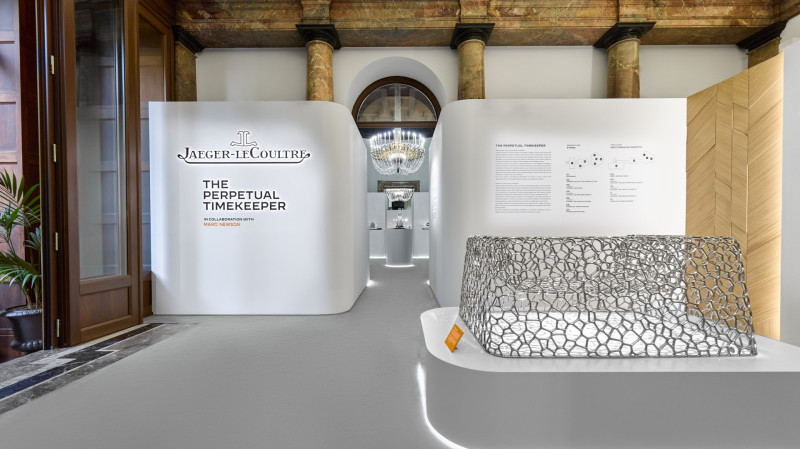
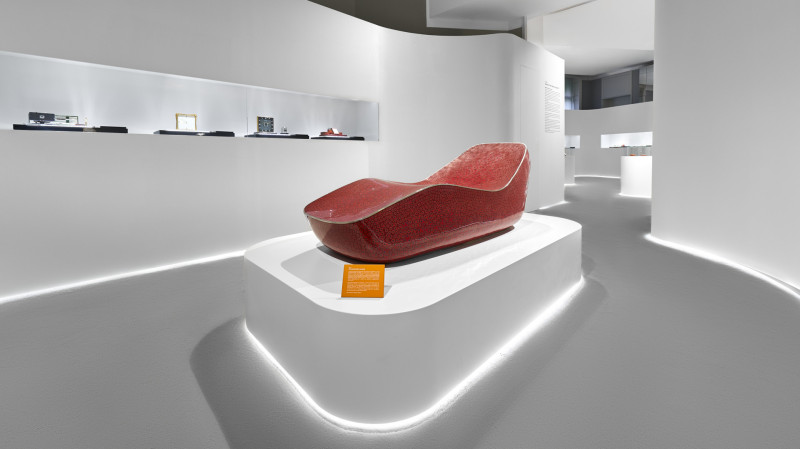
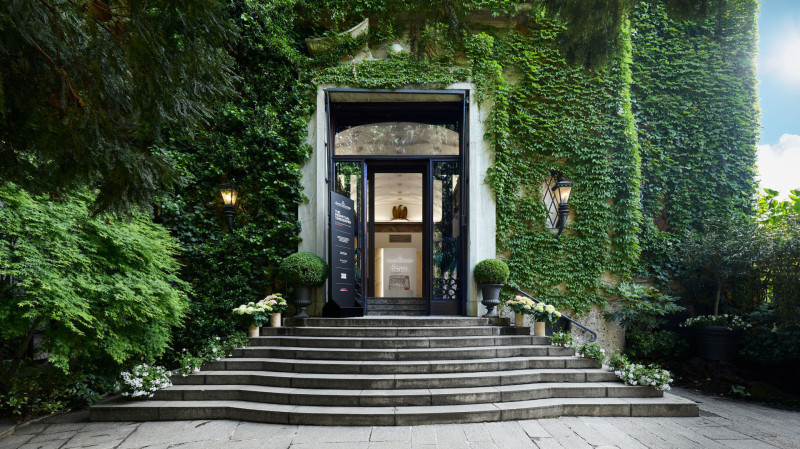
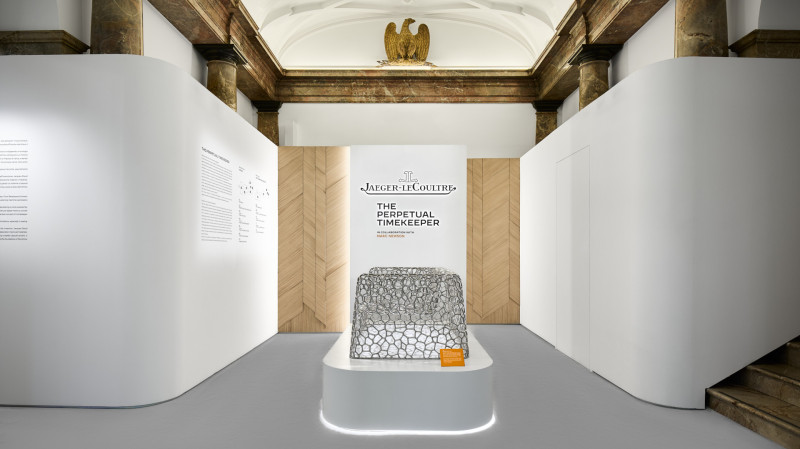
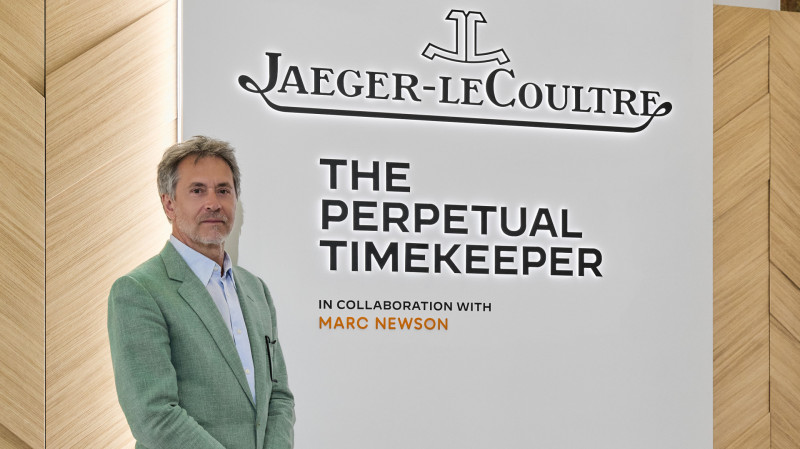
During Milan Design Week this April, Jaeger-LeCoultre invites the public to discover ‘The Perpetual Timekeeper’, an immersive exhibition that explores the continuous dialogue that exists between design and daily life, through timekeeping objects that measure life’s tempo minute by minute, day after day.
The exhibition traces the evolving style of timekeeping, showcases the extraordinary one-of-a-kind Atmos clock, marks the unveiling of five exceptional new timepieces, and presents a curated selection of heritage watchmaking objects. This exclusive showcase pays tribute to the Maison’s long-standing creative collaboration with acclaimed industrial designer Marc Newson, a partnership first initiated in 2008. Alongside the unveiling of exceptional novelties, Newson’s avant-garde vision also extends beyond watchmaking to include a selection of his distinctive design pieces. ‘The Perpetual Timekeeper’ is open to the public free of charge and will run from 21–26 April 2026 at Villa Mozart in the historic centre of Milan.
THE ART OF TIME, UNBOUND
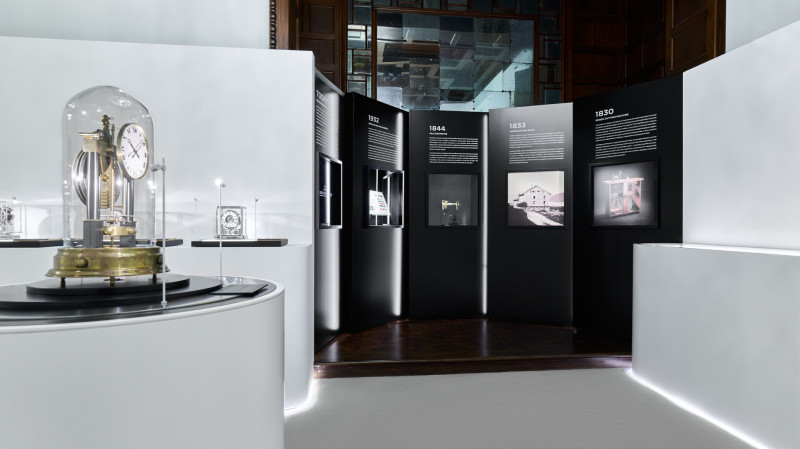
At Jaeger-LeCoultre, the art of horology extends beyond the wrist. Since 1833, the Maison has built its legacy on mastering the intricacies of watchmaking calibres. As the 20th century brought profound transformations in society, technology and design, Jaeger-LeCoultre expanded its creative expression, applying its expertise to a diverse range of timekeeping objects including Atmos, where mechanical ingenuity and design culture converge.
Embodying the contemporary design values of Milan Design Week, ‘The Perpetual Timekeeper’ celebrates a remarkable marriage of technical ingenuity, design and craftsmanship. Highlights include:
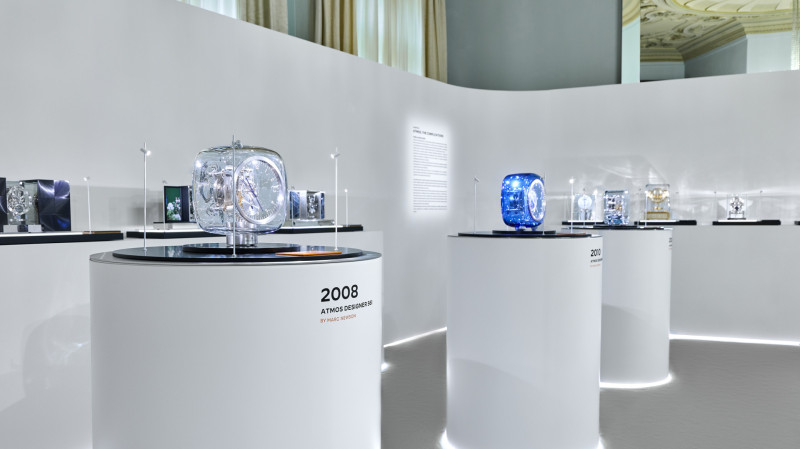
- An unprecedented collection of timepieces, including 53 design-led timekeeping objects from Jaeger-LeCoultre’s archive collection, created for travel, for home and for the desk, as well as 32 Atmos clocks spanning more than nine decades
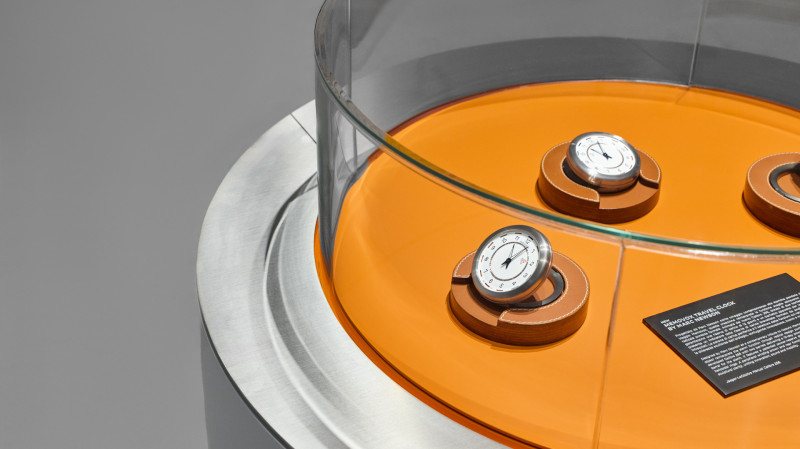
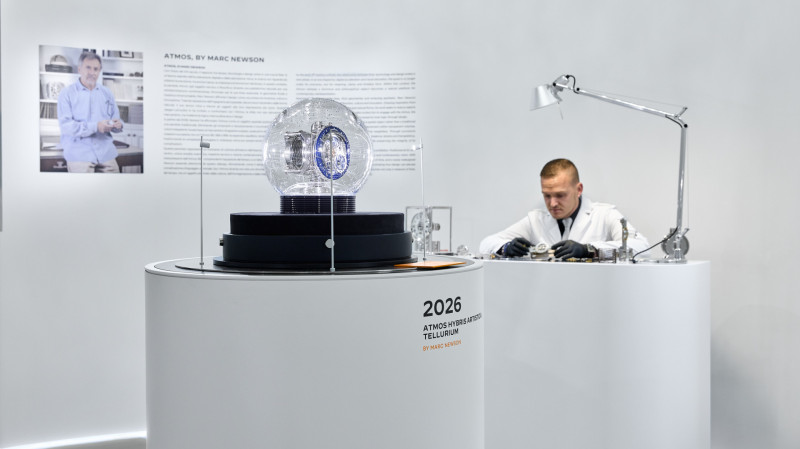
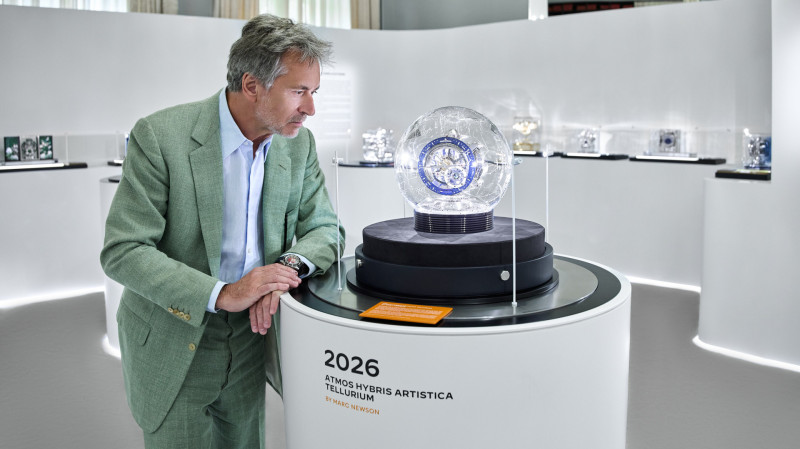
- The unveiling of five new clocks: two Atmos clocks (Atmos Hybris Artistica Tellurium and Atmos Designer Calibre 568) and a new travel clock (Memovox Travel clock), all created in collaboration with the celebrated industrial designer, Marc Newson; and two Atmos clocks that showcase rare decorative handcrafts, the Atmos Régulateur Enamel Colibris and the Atmos Régulateur Wood Marqueterie
- Live demonstrations that reveal the mystery of how the Atmos mechanism achieves apparent perpetual motion
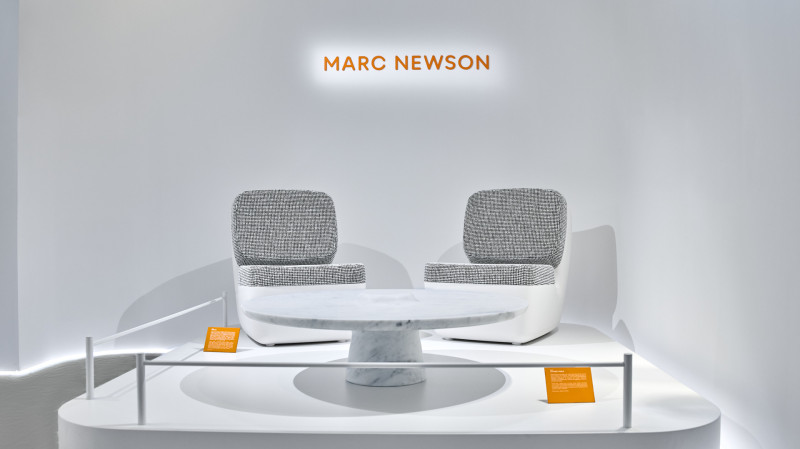
- A curated selection of Marc Newson’s signature designs – including chairs, tables, and other unique pieces – all bearing his distinctive signature
A STORY TOLD IN SIX CHAPTERS
‘The Perpetual Timekeeper’ tells the fascinating story of the Atmos as well as showcasing Jaeger-LeCoultre’s rich legacy of creative design and technical ingenuity in a wide range of other timekeeping objects.
CHAPTER I: ATMOS, THE STORY
The dream of perpetual motion has fascinated humanity for centuries, expressing a deeper desire to master time, energy and autonomy. This long-standing quest took a decisive step in 1928 when a Swiss radiological engineer, Jean-Léon Reutter, succeeded in developing a prototype clock that came closer to perpetual operation than any other mechanism yet created. Known as the Atmos 0, it was powered not by rewinding or any other conventional energy source, but by subtle variations in air temperature, thus creating the unprecedented concept of a timekeeper designed to operate autonomously.
Early commercial versions revealed technical limitations, yet the invention’s promise remained undeniable. Jacques-David LeCoultre realised that, despite the brilliance of the invention, the mechanism required exceptional watchmaking skill to make it fully viable. He recognized its poetic force and mechanical potential, inviting Reutter to join forces with LeCoultre & Cie, initiating a collaboration that united visionary invention with high watchmaking expertise.
Refining the intricate mechanism and enhancing its reliability, this passionate collaboration first resulted in the Atmos I in 1932. This model featured apparent perpetual motion, on principle, able to run indefinitely with minimal external input as long as the ambient air temperature fluctuated, creating the illusion of endless operation.
Until 1938, early Atmos models used a mercury-driven motor block: a system of communicating vessels in which thermal expansion and contraction powered the movement. However, mercury’s fragility made transport difficult and limited reliability. In response, LeCoultre replaced it with a gas-filled capsule (ethyl chloride) and centralized production, while the underlying mechanism initially remained unchanged – known as Calibre 30A, as used in the Atmos I and II.
Powered solely by subtle variations in ambient temperature, it could transform a change of just 1°C into around 48 hours of autonomy, enabling the clock to function indefinitely without any manual input.
Soon adopted as a diplomatic gift, earning the name 'President’s Clock,' today’s Atmos Classic remains its dignified heir, preserving the timeless design codes that made the Atmos a symbol of prestige, continuity and enduring precision.


CHAPTER II: ATMOS, THE MÉTIERS RARESTM
With its intricate mechanism and the mesmerisingly slow beat of its annular balance wheel, the Atmos clock transcends mere timekeeping; as an objet d’art rooted in the elegant minimalism of its Art Deco origins yet constantly evolving, it is a natural canvas for artistic expression.
Usually displayed within a glass dome or crystal case, the distinctive architecture of the Atmos movements has anchored a strong visual identity that is celebrated as much as the time it measures, embracing diverse designs while retaining its core spirit. Since the 1970s, Jaeger-LeCoultre has revived the spirit of aesthetic experimentation that marked the first decade of the Atmos in the 1930s. A series of collaborations with masters of decorative crafts have elevated Atmos clocks into works of fine art, and leading contemporary designers have reimagined the Atmos in their own style, while always preserving the clock’s unmistakable identity.


CHAPTER III: ATMOS, THE COMPLICATIONS
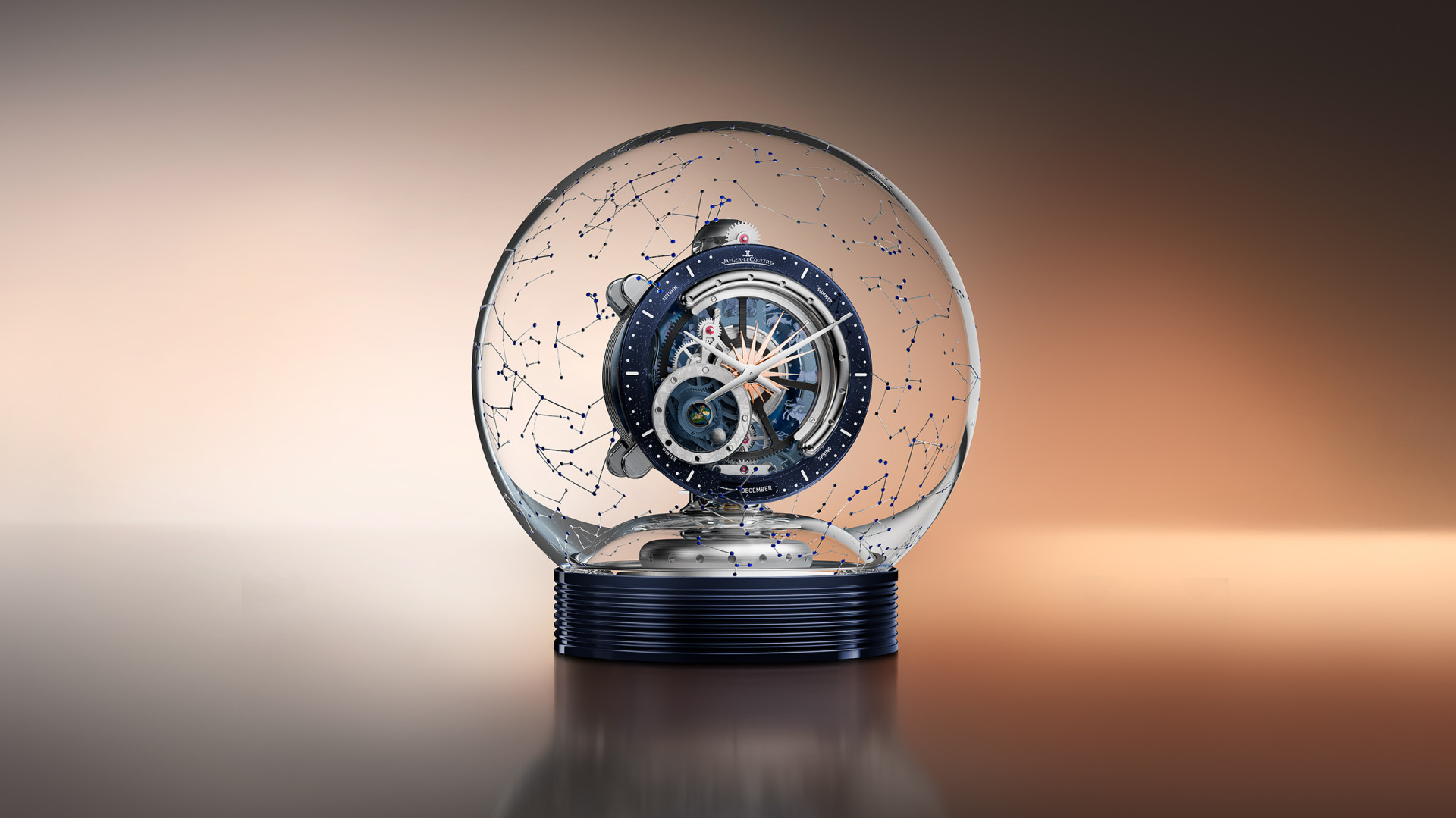
The Atmos’ apparently magical way of working is also a limitation: because the mechanism produces only a very small amount of energy (a single 15-watt incandescent light bulb consumes the energy equivalent to 60 million Atmos clocks), there is not enough power left over to drive additional functions. Visitors to the exhibition will discover how Jaeger-LeCoultre’s engineers solved this problem in 1982 with a new movement – Calibre 540 – that made it possible to integrate complications with only an infinitesimal increase in energy consumption. Having discovered that the ideal complications are those based on the long, slow cycles of the astronomical phenomena that lie at the origin of time measurement – such as the moon phases and seasons – they developed the first moon-phase Atmos at the end of the 1990s. In 2022, Jaeger-LeCoultre’s watchmakers crafted the most complex Atmos clock ever conceived: the Atmos Hybris Mechanica Calibre 590, nicknamed the Atmos Tellurium as it incorporates a contemporary version of the tellurions – three-dimensional mechanical mobiles that precisely reproduce the true cycles of the Earth, Sun, and Moon – invented during the Renaissance.


CHAPTER IV: CLOCKS, THE WATCHMAKING OBJECTS
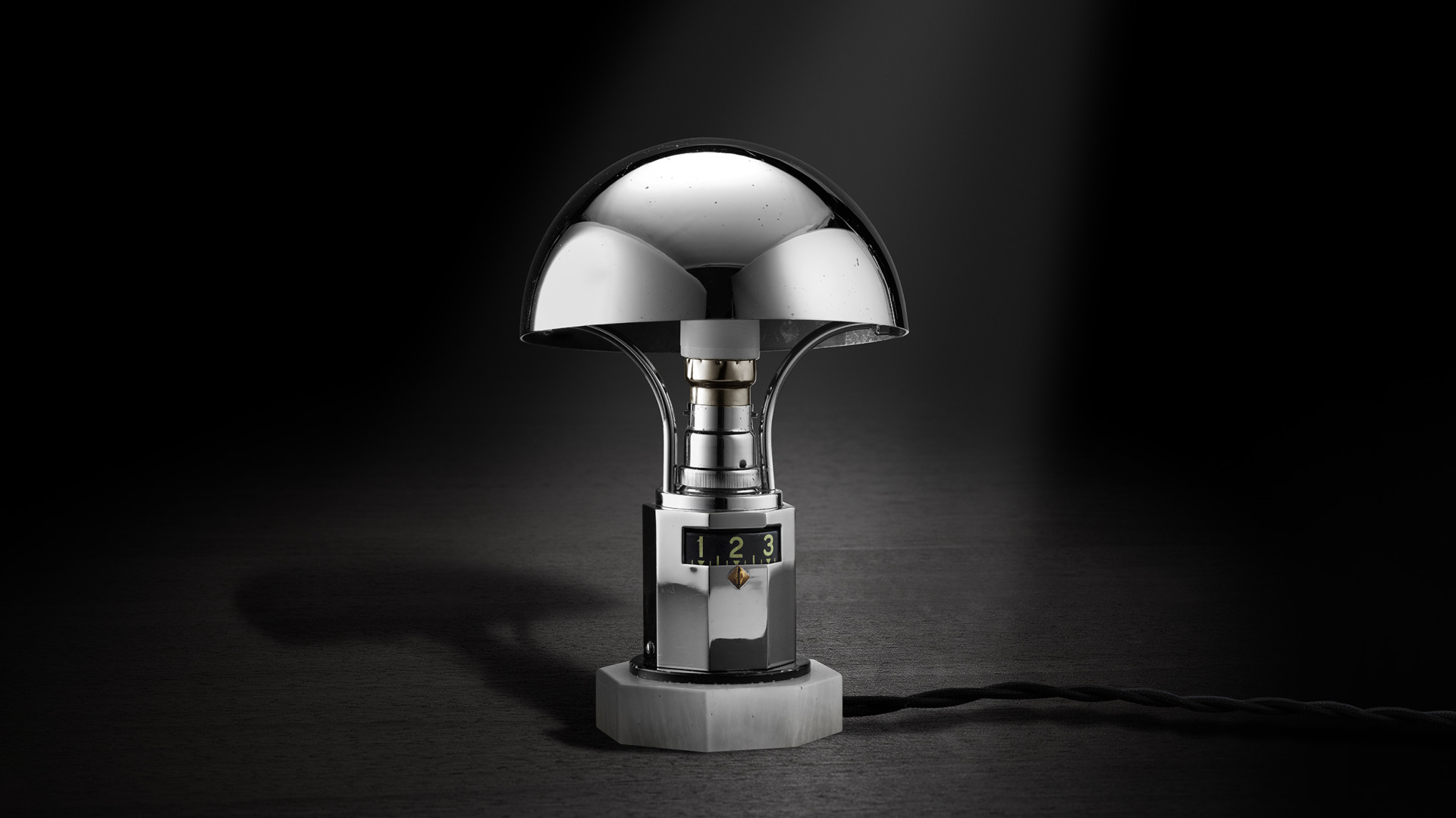
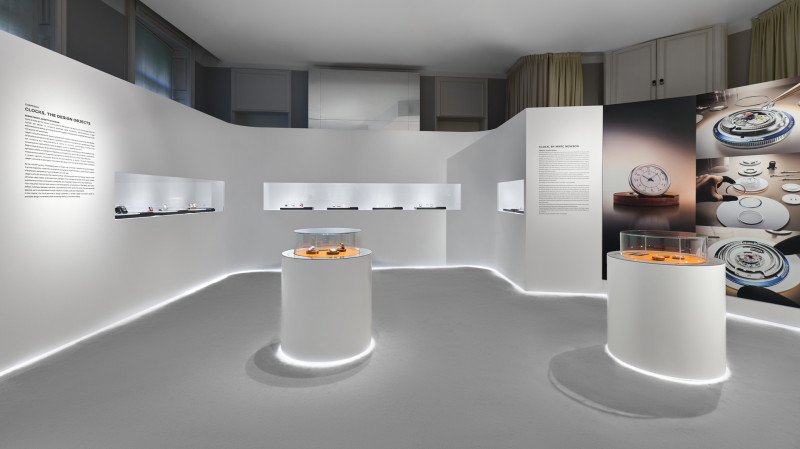
In the 1920s, personal access to time remained limited, positioning the timepiece as an accessory reserved for a privileged few. Jaeger-LeCoultre reimagined the clock by transforming familiar objects of daily and professional life. Thus, desk accessories, lamps and architectural miniatures gained the ability to measure and display time. By embedding timekeeping functions into useful, everyday items, the Maison blurred the boundary between utility and watchmaking, transforming the ordinary into the extraordinary through imaginative design and meticulous craftsmanship. Conceived to integrate naturally into their environment rather than commanding attention as standalone objects, these timekeepers were often unexpected in form or playful in reference, blending refinement and surprise. Designed to be handled and lived with, set on a tabletop, read from both sides or slipped into a purse, these objects reflect a new relationship with time that is intuitive and naturally woven into the rhythm of daily life.
CHAPTER V: CLOCKS, THE TRAVEL OBJECTS
As the 20th century progressed and modern life was increasingly defined by mobility, Jaeger-LeCoultre responded by transforming clocks into portable objects designed to accompany their owners wherever the journey led. Marrying technical expertise to aesthetic elegance and creativity, the Maison’s nomadic timekeepers include unexpected and immaculately crafted designs, sometimes incorporating functions such as barometers and thermometers. From the 1930s onwards, travel clocks embodied this vision of mobility. Miniaturised and integrated into mirrors, leather cases or folding table clocks, they combined mechanical reliability with practical design solutions adapted to movement. Designed to be handled and transported, these objects reflect an era fascinated by precision, progress, mechanical reliability and functional elegance. The introduction of the Memovox mechanical alarm in 1950 transformed time from a passive display into an active signal. Adapted into watches, desk clocks and travel objects, Memovox embodied a philosophy of time that alerts, guides and reassures.


CHAPTER VI: CLOCKS, THE DESIGN OBJECTS
From the 1920s onwards, fuelled by social, economic and technological change, a tremendous burst of creative energy expressed itself through a new design language that shaped every aspect of life – from architecture and graphics to modes of transport, household products and even industrial machinery. Clocks were no exception and Jaeger-LeCoultre embraced the new spirit of modernity, rethinking both form and display. Clocks became playful, surprising and sometimes provocative – objects of expression designed as a style statement as much as a display of the time. From Art Deco table clocks to boldly graphic compositions of the 1960s, each creation reflects a dialogue between watchmaking expertise and the spirit of its time. Mechanical precision remains indispensable, yet it is wrapped in freedom of interpretation, shape, material and style. Conventions are questioned: hands shift off-centre, dials rotate, proportions stretch or contract. These objects invite conversation, spark curiosity and transform the simple act of reading the hour into a rich experience.


EXCLUSIVE NOVELTIES: THREE MARC NEWSON DESIGNS AND TWO EXCEPTIONAL ATMOS PIECES
A creative collaboration with Marc Newson: Jaeger-LeCoultre and the celebrated industrial designer Marc Newson have periodically collaborated since 2008, pooling their expertise and creative energy to produce new interpretations of the Atmos – a clock that the designer describes as ‘a complex and magical object’. In 2008 they released Calibre 561; in 2010 it was Calibre 566; and in 2016 came the first iteration of Calibre 568. Famous for his work, ranging from furniture to luggage, a surfboard and a superyacht – Marc Newson has a longstanding interest in timepieces and has been fascinated by the Atmos clock since he first saw one in his early teens.
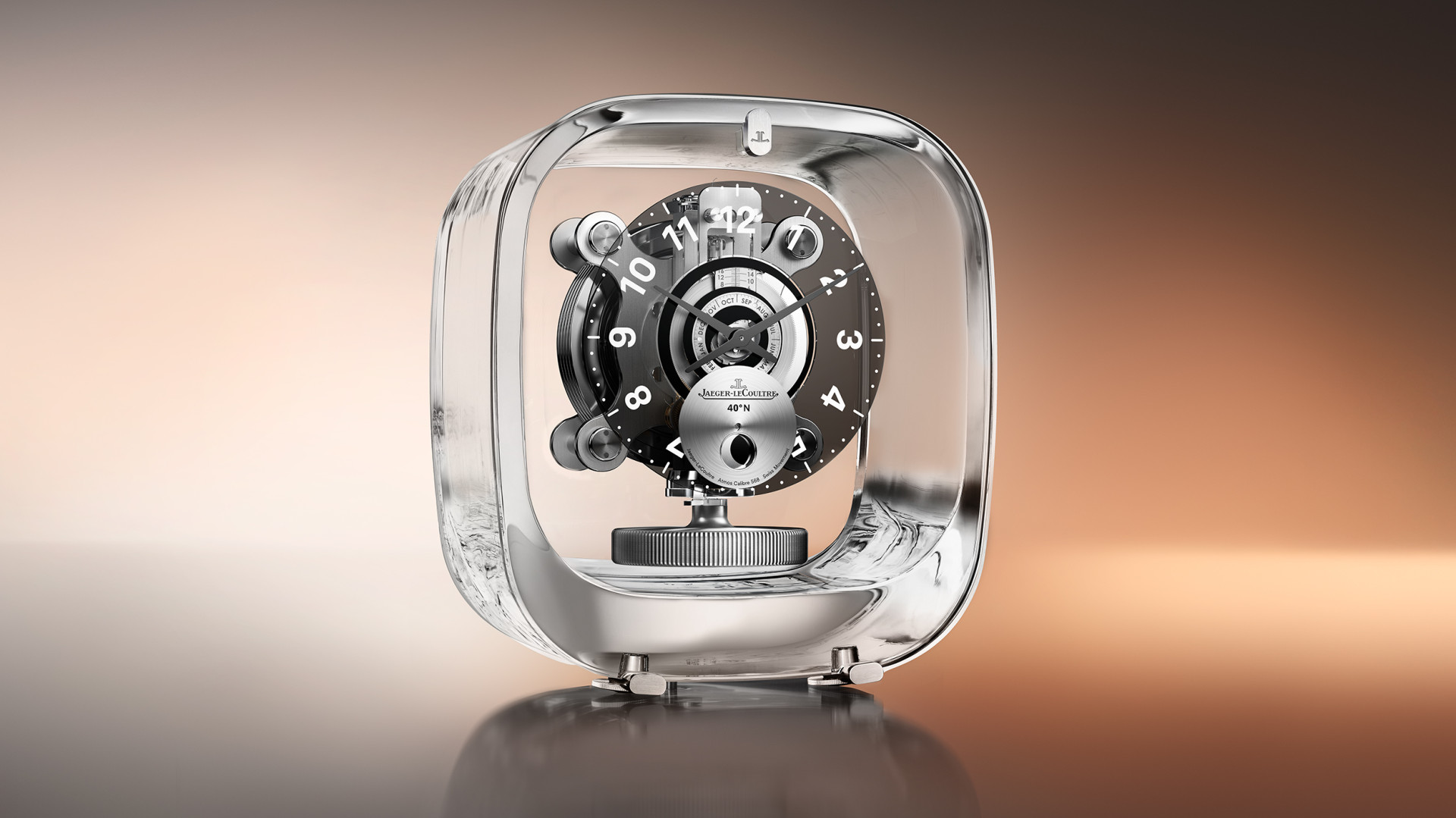
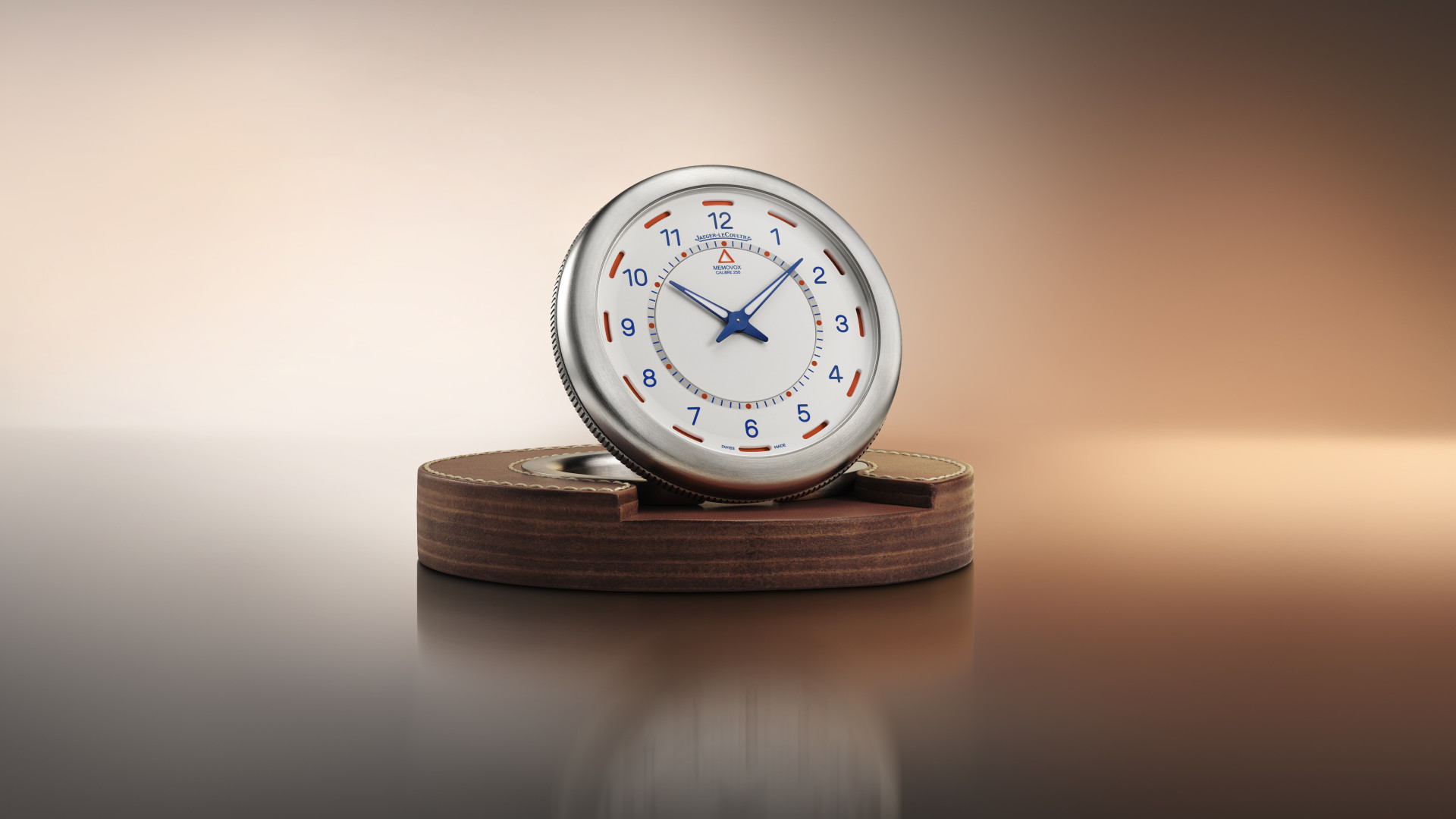
During ‘The Perpetual Timekeeper’ Jaeger-LeCoultre will unveil three new designs by Marc Newson, alongside a curated selection of his exceptional furniture creations: a new version of the Atmos Tellurium, a new interpretation of the Atmos Calibre 568 that he designed in 2016 and a new Travel Clock inspired by the Maison’s iconic Memovox alarm wristwatches.
Atmos Hybris Inventiva Tellurium by Marc Newson
Atmos Designer Calibre 568 by Marc Newson
Memovox Travel Clock by Marc Newson
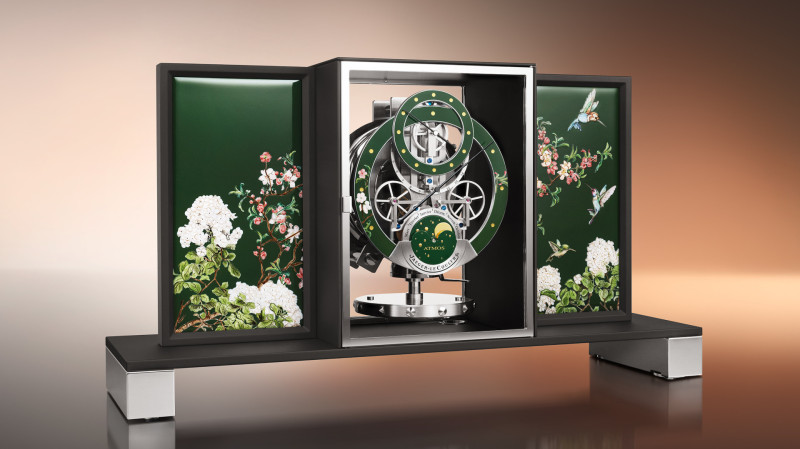
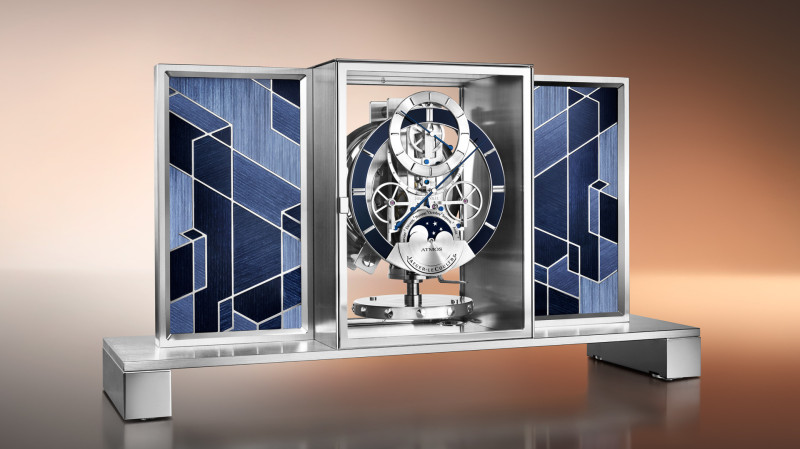
A celebration of craftsmanship: The preservation and perpetuation of traditional decorative handcrafts – widely used in watchmaking until the end of the 19th century but often forgotten as tastes changed during the 20th century – has long been a core value at Jaeger-LeCoultre. As a fine watchmaking Maison, it takes its responsibility to nurture these crafts seriously, and as one of the few watchmaking Maisons to have its own Métiers Rares™ atelier in-house, it constantly encourages their evolution by applying them to different timepieces, in new ways. Shining the spotlight on the decorative crafts, two new Atmos models will be unveiled during the exhibition, one showcasing miniature painting in Grand Feu enamel and the other paying homage to the traditional craft of wood marqueterie.
An exclusive Milan Design Week exhibition: ‘The Perpetual Timekeeper’ expresses a singular philosophy of time. At once scientific, functional and artistic, Atmos and the watchmaking objects that surround it form a coherent universe where design, mechanics and human invention shape a vision of time that is durable, thoughtful and deeply connected to the world around us.
‘The Perpetual Timekeeper’ will run from 21–26 April 2026 at Villa Mozart, via Mozart 9, 20122 Milan and is open to the public free of charge from 10.00 to 18.30 daily. Visitors may register online in advance at https://bit.ly/ThePerpetualTimekeeper or on arrival at the exhibition.


Downloads

|
|
|
|
|
|
|
|
|
|
|
|
|
|
|
|
|
|
|
|
|
|
|
|
|
|
|
|
|
|
|