

INTRODUCING THE COLLECTIBLES VIII ‘LECOULTRE’
9 MUSEUM-GRADE PIECES UNVEILED IN NEW YORK CITY
KEY FACTS:
The Collectibles: a programme of sought-after collection pieces offered for acquisition and presented at the New York flagship from November 6 to November 20
An exclusive LeCoultre capsule: a remarkable sellable curation of nine pieces produced exclusively for the American market between 1933 and 1981
Museum-grade pieces: the story of Jaeger-LeCoultre’s American chapter to be explored through a curation of meticulously restored timepieces by the in-house watchmakers of the restoration workshop at the Manufacture-Atelier
Jaeger-LeCoultre is delighted to present the eighth capsule of The Collectibles, a meticulously curated selection of nine museum-grade timepieces to be unveiled in New York on November 6 and available for acquisition by collectors worldwide. This edition, the second presentation of The Collectibles in New York City is coinciding with the 250th anniversary of the United States’ Declaration of Independence.
As a tribute, Jaeger-LeCoultre is opening part of its archives to explore the fascinating story behind its American timepieces. For the first time, the Maison brings together this chapter of its history – a testament to its longstanding connection with the United States, dating back to the middle of the 1930s. At the heart of the capsule is a curated selection of watches for sale, which were created exclusively for the American market.
THE COLLECTIBLES PROGRAMME
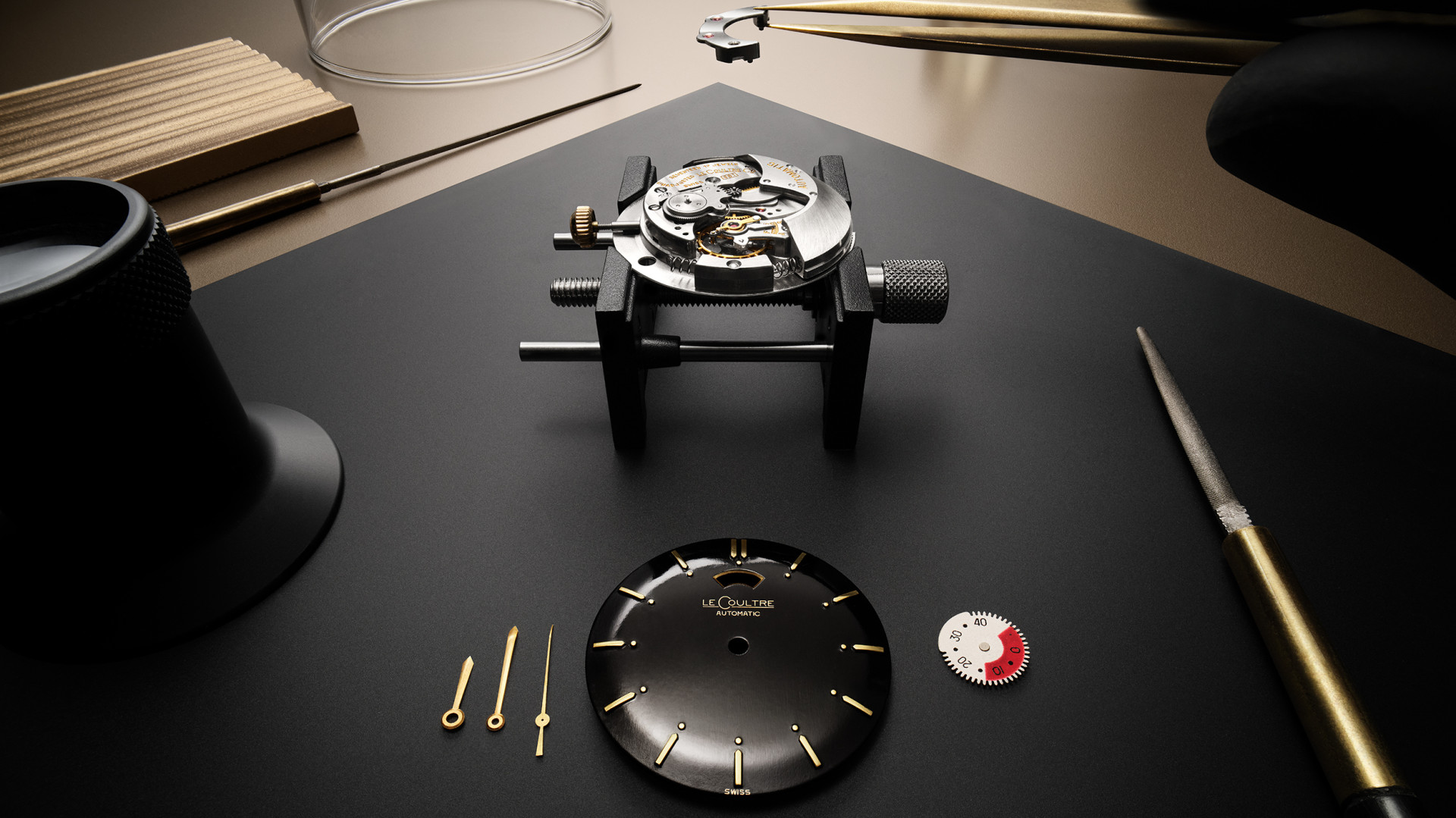
The Collectibles is Jaeger-LeCoultre’s in-house programme dedicated to sourcing, restoring and offering rare, museum-grade timepieces from the mid-20th century. Celebrating nearly 200 years of creativity, it highlights the Maison’s heritage through a curated selection of 17 emblematic models – from the Duoplan and Reverso to the Geophysic, Futurematic and Memovox Polaris – focusing on the ‘Golden Age’ of watchmaking from the mid-1920s to the 1970s. Presented through exclusive capsule releases worldwide, these timepieces invite collectors to become the next custodians of their stories. This commitment to heritage is made possible by Jaeger-LeCoultre’s dedicated restoration workshop, one of the very few maintained by a Manufacture. Here, 10 master watchmakers meticulously restore each piece, servicing movements, rebuilding components by hand and sourcing historical parts from exceptional heritage stocks, while preserving original character and patina. Once restored and certified to museum standards, each timepiece is ready to continue the story it began in the Vallée de Joux.
THE HISTORICAL AMERICAN SIGNATURE
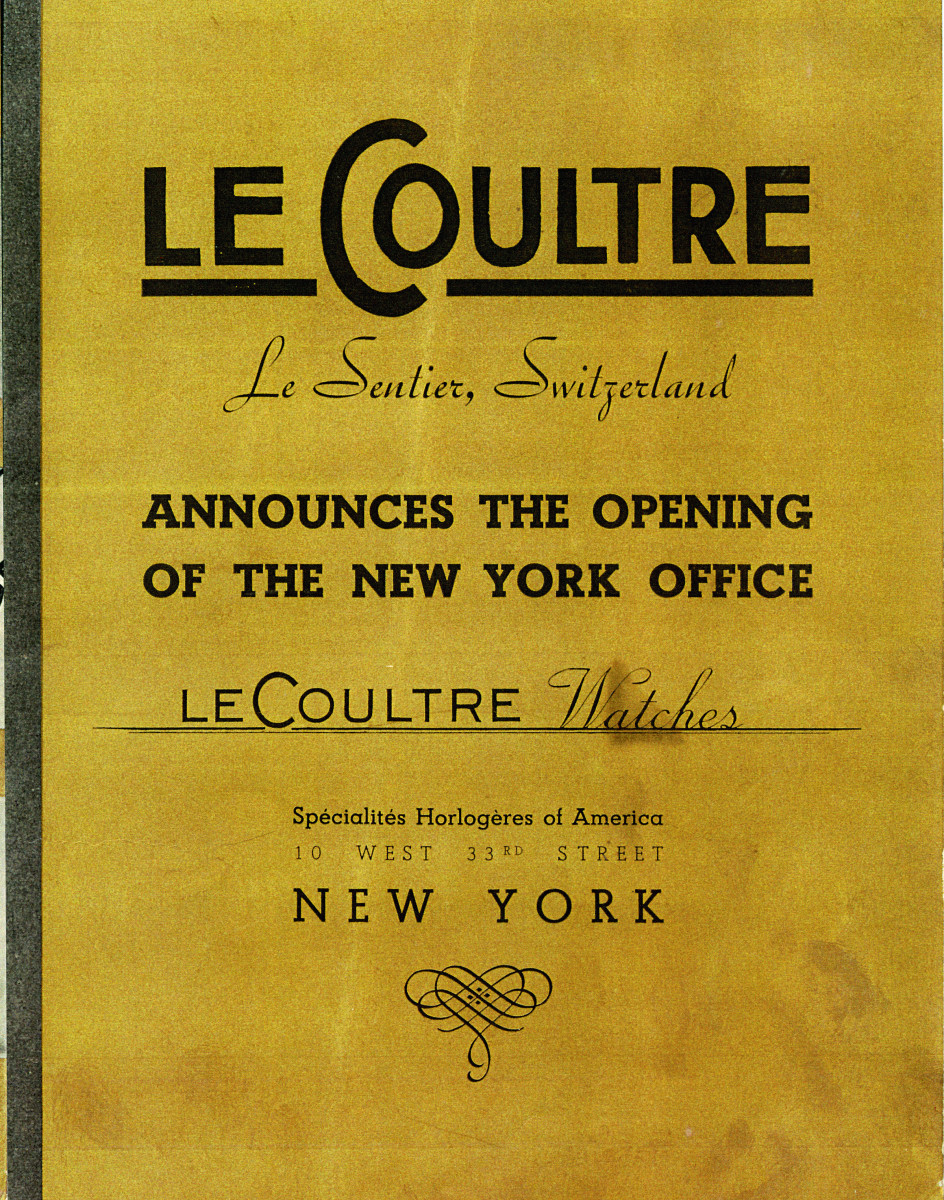
A distinctive name: In America, Jaeger-LeCoultre had another name. By the late 1920s, the Maison had already had an established presence in the United States under the name Jaeger, notably through its precision instruments and the creation of Jaeger Inc. in New York in 1926. Yet, when the Manufacture-Atelier expanded across America, another name appeared on its watches: LeCoultre. In 1936, LeCoultre S.H. of America opened its office in New York and LeCoultre watches and dials became a distinctive signature of the Maison in the US market.
Adapted to American realities: The United States was a highly protected market, where import duties could rise with a watch’s value and specifications. To navigate this system, LeCoultre’s watchmakers tailored their approach to American requirements. Rather than complete watches, Swiss movements crossed the Atlantic with their corresponding dials and hands, ready for completion in America. Cases were manufactured locally and watches assembled, adjusted and finished on site. This solution to the tariff system left subtle signatures. Movements destined for the US market often featured 17 jewels, were marked “unadjusted” and carried the customs code VXN.
American cases, American character: What began as a response to import regulations opened the way to greater creativity as cases were designed and produced specifically in and for the USA. Often gold-filled constructions or crafted in 14K gold (585/1000), these cases introduced new proportions, geometries and forms that differed from their European counterparts. Models such as the Jaeger-LeCoultre Powermatic Nautilus of the early 1950s reflected this distinctly American design language. The influence expanded as the local organisation developed a close understanding of American tastes and communicated these expectations back to the Manufacture-Atelier. Specific references and collections emerged in response to the market, ranging from refined dress watches to bolder creations such as the Memovox Deep Sea, the Master Mariner Deep Sea Barracuda or the Memovox Polaris. What had begun as an adaptation to local regulations evolved into a distinctive expression of Jaeger-LeCoultre creativity.
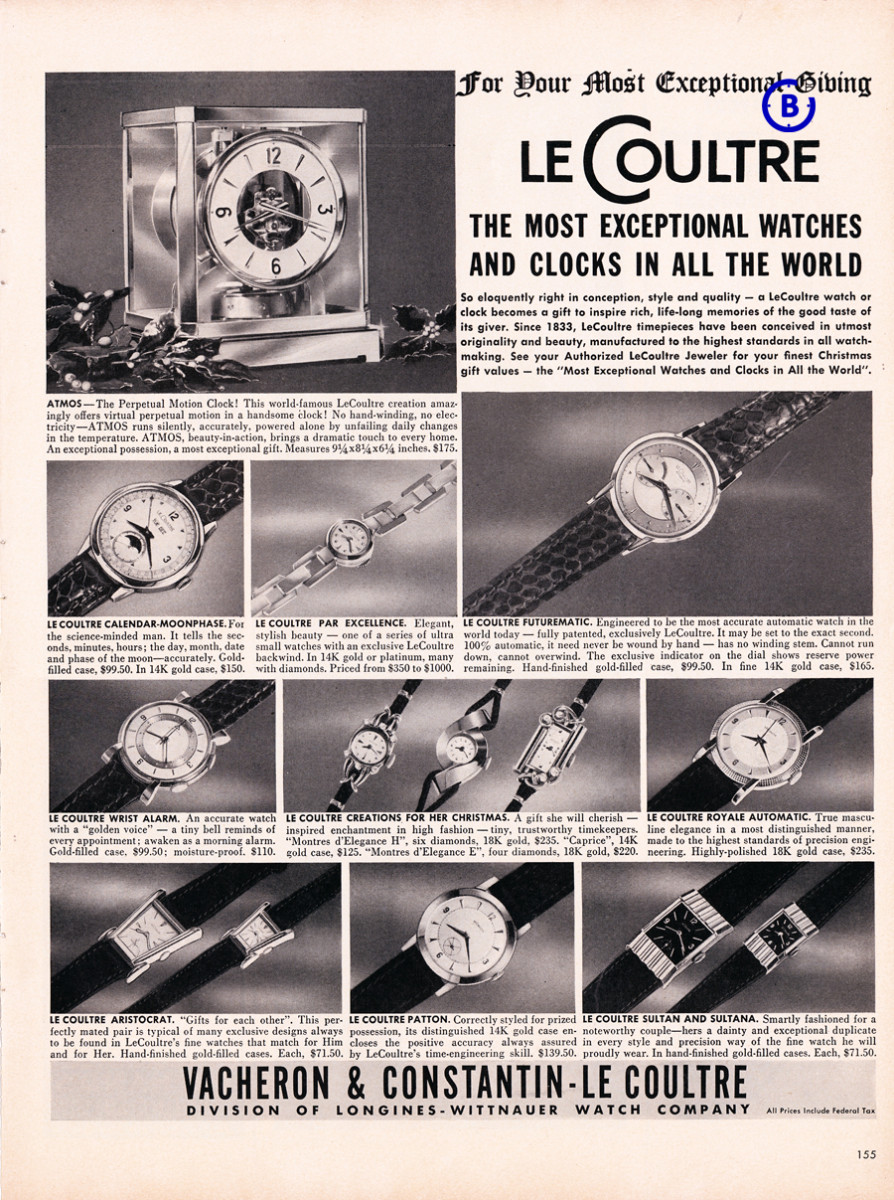
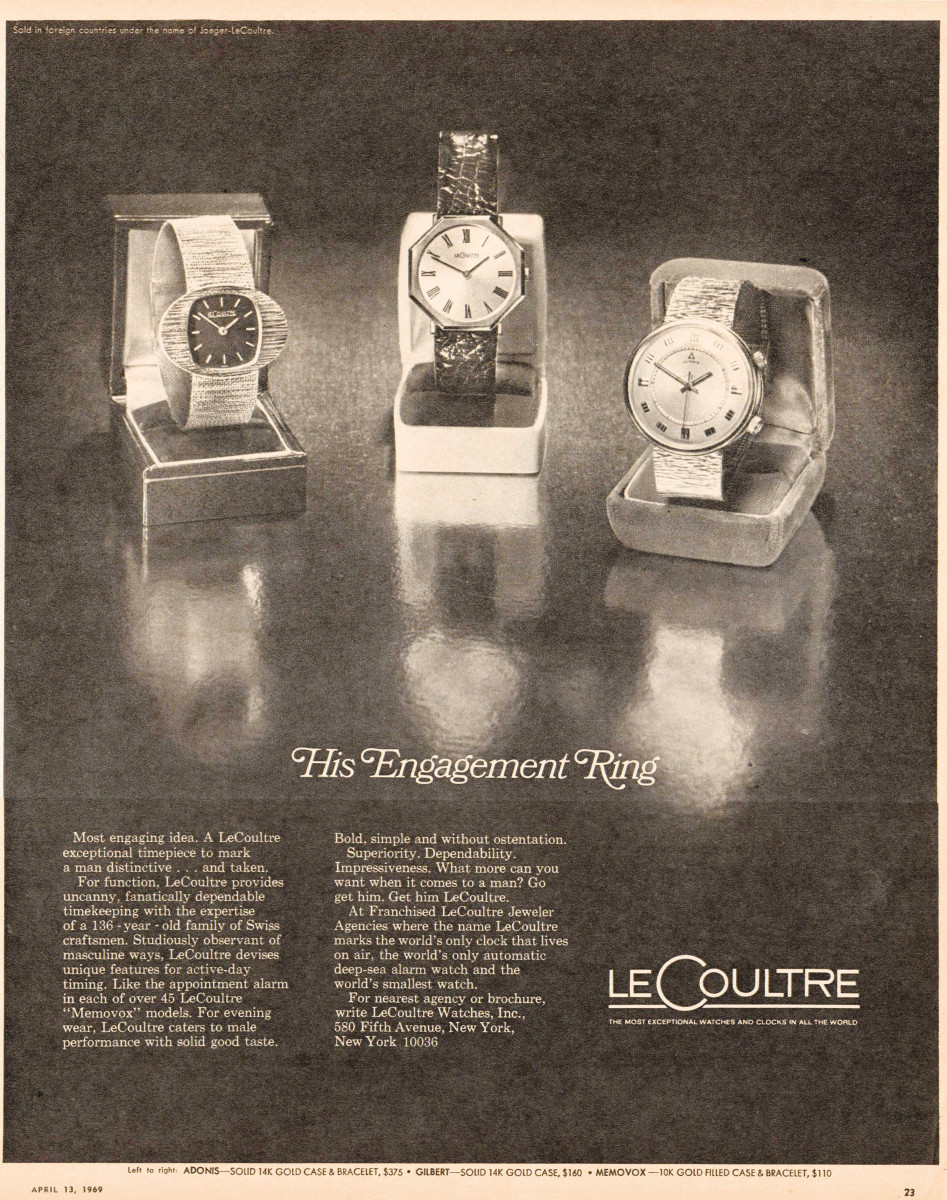
LeCoultre, in American culture: LeCoultre became deeply embedded in American culture. From military command to jazz, from Hollywood to motor racing, from the Space Age to the Moon generation, LeCoultre accompanied people who came to define modern America.
The end of the LeCoultre chapter: By the 1970s, the distinct identity of LeCoultre watches began to disappear as the Jaeger-LeCoultre name became established as the Manufacture-Atelier’s single global identity. The last LeCoultre dials date back to the late 1970s, marking the emergence of a unified identity in the United States and around the world: Jaeger-LeCoultre.
NINE MUSEUM-GRADE TIMEPIECES
The timepieces curated for The Collectibles Capsule VIII span every decade of the Manufacture-Atelier’s technical and aesthetic innovation from the 1930s to the 1980s. Together, they bear witness to a remarkable chapter in watchmaking history – one in which Jaeger-LeCoultre did more than simply create watches for the American market for several decades: it helped shape the evolution of watch design itself.
A rare 1933 Reverso in a distinctive chocolate-brown colour is powered by the Manufacture-Atelier’s Calibre 410, the first in-house movement developed specifically for the Reverso. Introduced in 1933, this calibre pioneered a small-seconds display at six o’clock. This timepiece is distinguished by its exceptionally rare chocolate-brown dial, a colour historically available only by special request. Paired with a contrasting steel case in the proportions of one of the earliest Reverso models, this timepiece catches and reflects the light beautifully. Its rich brown tones are echoed by the handcrafted brown calfskin strap.
Born in 1942, the Triple Calendar is a complication specifically designed for the growing wristwatch industry, displaying the date, day and month. An extremely elegant response to a concern for utility, intended for men of the world. As well as creating its own watches, Jaeger-LeCoultre supplied these calibres to some of the most renowned names in watchmaking. Among the first complications conceived for a series-produced wristwatch, it left a lasting imprint on both the Manufacture-Atelier and the history of watchmaking. It could be regarded as the gold standard of useful complications.
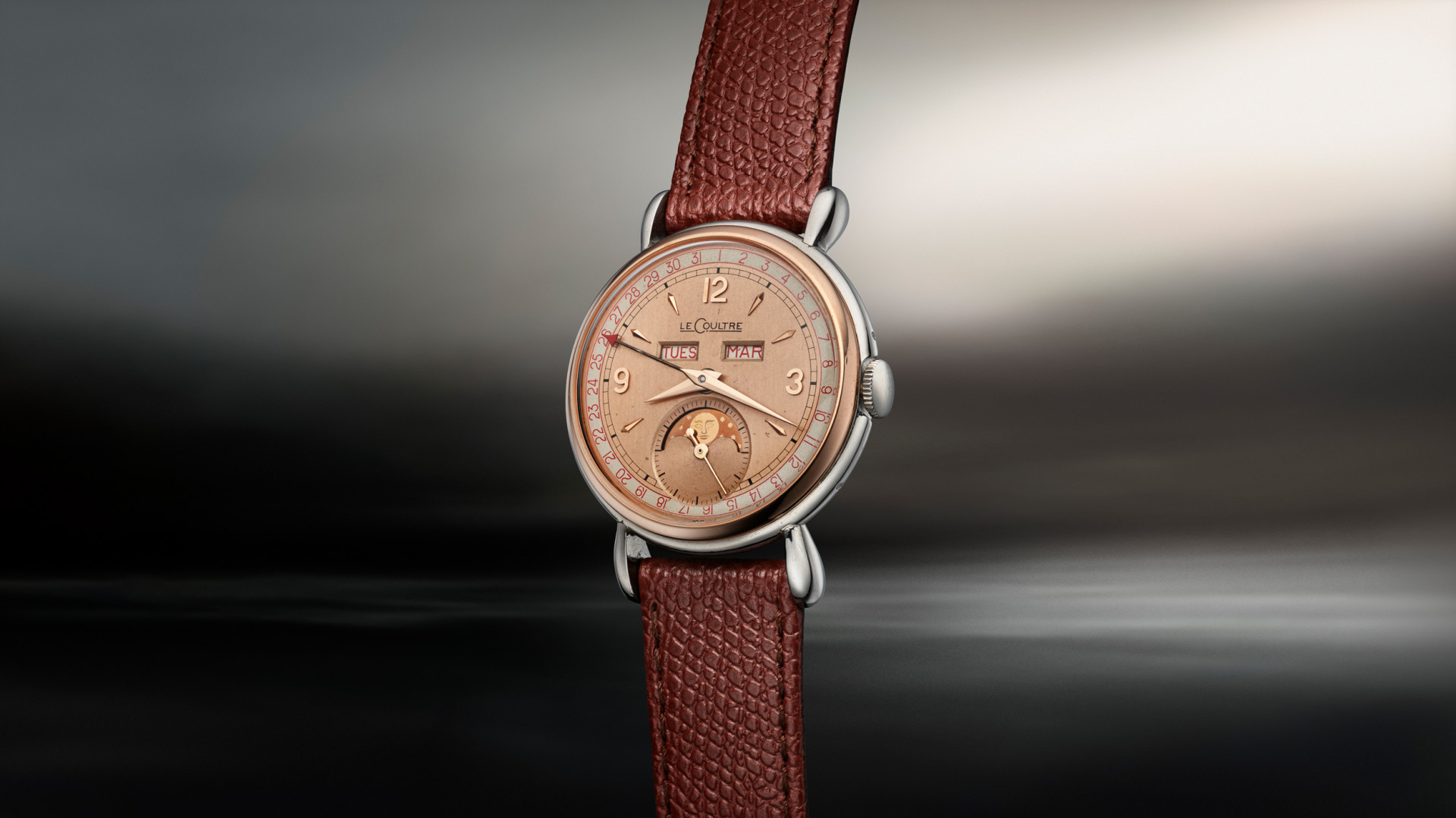
A 1947 Triple Calendar is distinguished by an unusual mix of materials. This timepiece pairs a steel case with an 18K pink gold (750/1000) bezel, a copper-coloured dial and a handcrafted grained brown calfskin strap. Together, these elements create a distinctive harmony of warm tones. Its 33 mm case houses Calibre 494, which introduced a moon-phase display integrated into the small-seconds counter.
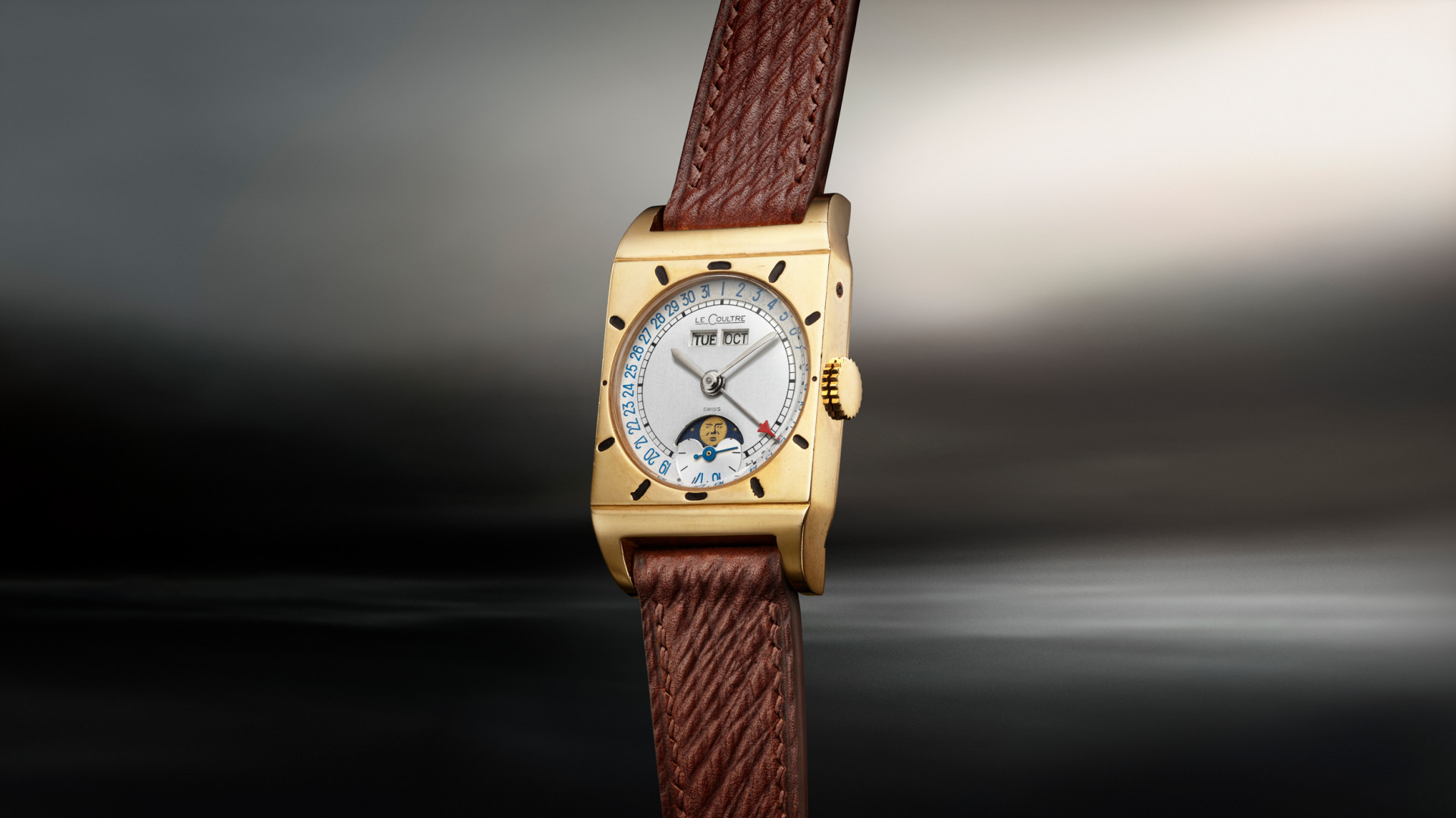
The key piece of this capsule is a highly distinctive and exceptionally rare circa 1952 Triple Calendar Reference 2726, it was the first Triple Calendar model of the Maison produced in a rectangular case, rather than the classical round form. The hour markers are engraved and lacquered in black on the case. The dial is distinguished by bold, blued date markers, while the particularly rare 18K yellow gold (750/1000) case is paired with a handcrafted brown calfskin strap. The timepiece is fitted with Calibre 484, the Manufacture-Atelier’s third-generation Triple Calendar movement. This commemorative model was launched in 1949, as a tribute to Jacques-David LeCoultre who had passed away the previous year. A pivotal figure in the history of the Manufacture-Atelier, he played a decisive role in its development and international expansion.
In 1937, Jacques-David LeCoultre sealed the agreement with Edmond Jaeger bringing their names together and laying the foundations for the Maison as it is known today.
Jacques-David LeCoultre also played a central role in establishing the Manufacture-Atelier’s presence in the United States. He oversaw the development of the first LeCoultre timepieces destined for the American market and guided the Manufacture-Atelier through the early stages of its expansion there. Under his leadership, the Maison developed some of its most emblematic creations, including the slim pocket watch ‘Couteau’, the Reverso, the Duoplan and the Triple Calendar.
Launched in 1949, the Powermatic helped to popularise the automatic watch, becoming Jaeger-LeCoultre’s flagship throughout the 1950s. Powered by the newly patented Calibre 481, it was the first wristwatch to display its power reserve indicator on the dial. Initially referred to simply as ‘self-winding’ or ‘automatic’, the name Powermatic soon emerged in the USA and was adopted for an entire family of watches featuring the power reserve complication.
Dating to circa 1950, this Jaeger-LeCoultre Powermatic Nautilus features disctinctive lugs that extend across the top of the bezel of its yellow gold-filled case. It is one of a small number of Powermatic watches by LeCoultre whose case design, characterised by particularly prominent lugs, earned them the name “Nautilus” in the 1950s, well before the name was adopted by another major watchmaker. The 34.6 mm case houses the groundbreaking Calibre 481 and is paired with a handcrafted black calfskin strap.
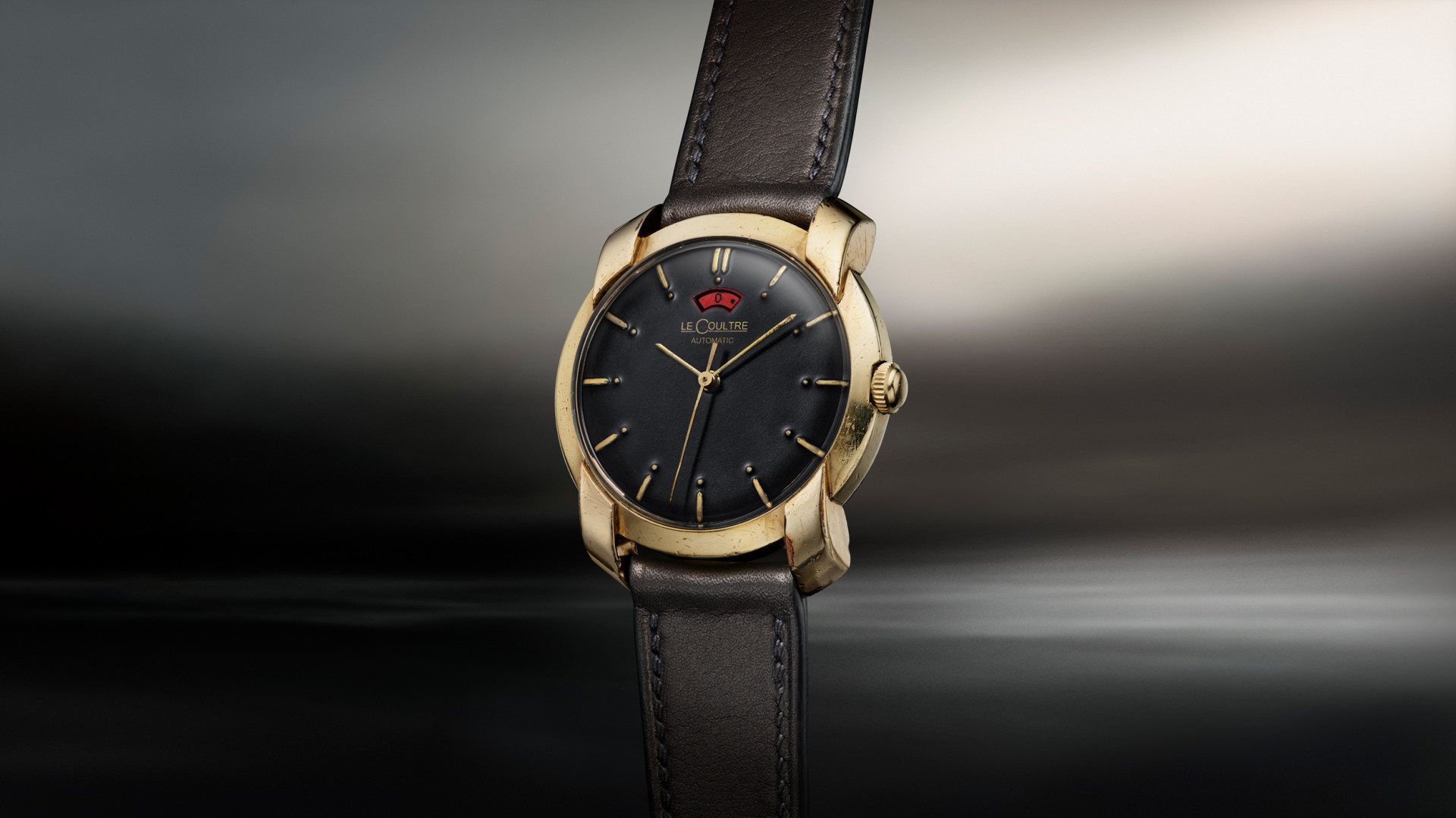
A 1952 Powermatic epitomises the early 1950s aesthetic: its unique beetle lugs are a luxurious touch carried over from 1940s jewellery design and illustrate American tastes for more flamboyant styling. The watch is equipped with Calibre 481. The emblematic black dial and red power reserve indicator – signature of the early Powermatic models – create a strong contrast with the 14K yellow gold (585/1000) case and its handcrafted black calfskin strap.
In the 1950s, as the development of scuba technology transformed deep-sea diving from a risky military endeavour to an increasingly popular leisure activity – especially in North America – Jaeger-LeCoultre developed its first diving watches and continued to expand the genre over the following two decades. With robust materials complemented by highly legible displays, these early diving models can be considered the first generation of ‘tool’ watches created for the civilian market.
A fine example of the Master Mariner Deep Sea ‘Barracuda’ from 1968, paired with a black rubber strap. Distinguished from the non-diving Master Mariner models by its tonneau-shaped Super Compressor steel case and crown-operated inner rotating bezel. This timepiece was registered as ‘Barracuda’ in the Maison’s American catalogues. Its movement, Calibre 883, also features a date display.
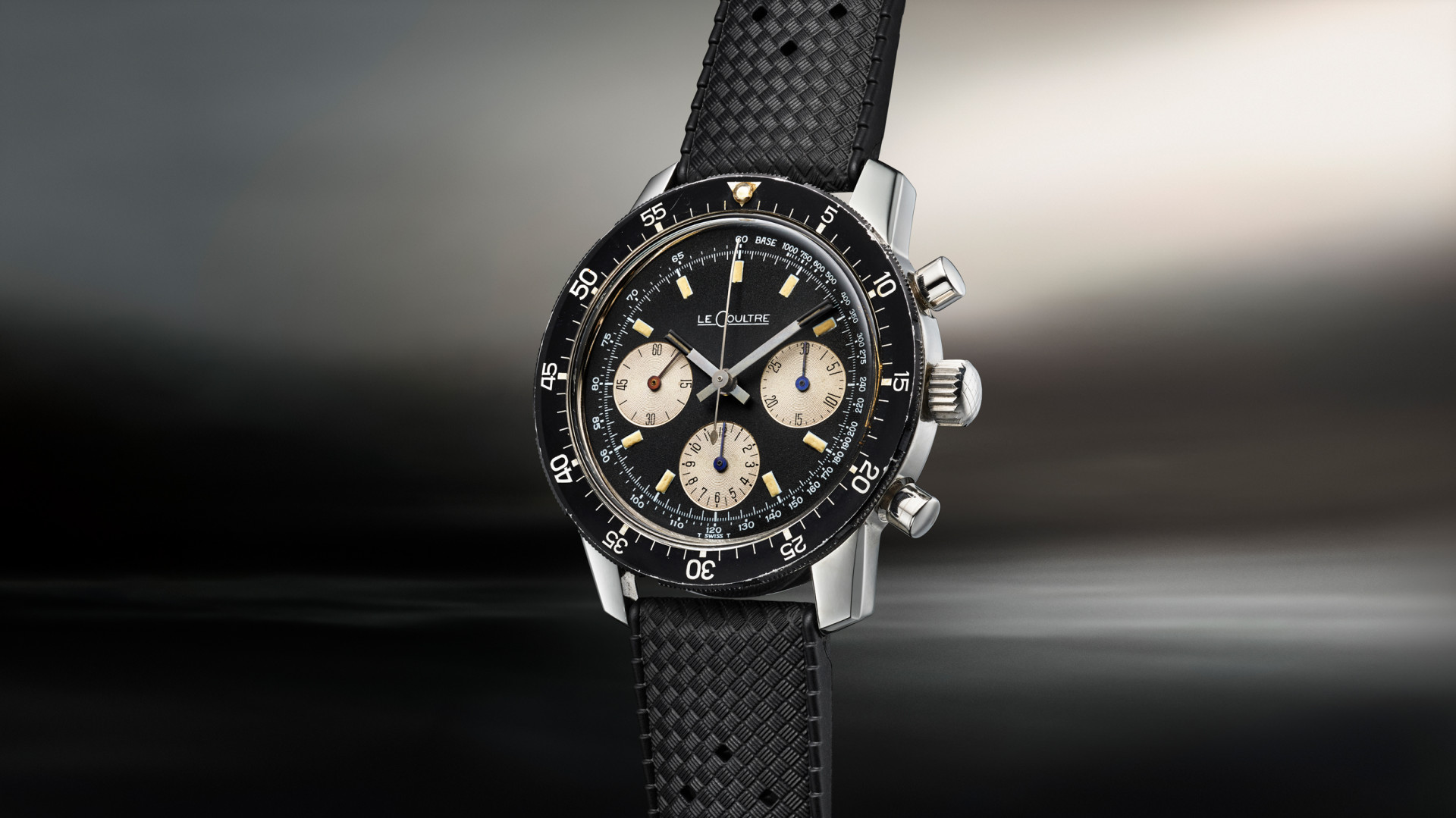
With its black dial contrasting with white subdials, a rare Shark Deep Sea from circa 1970 takes the functions of a diving watch to another level, incorporating a chronograph movement – the celebrated Valjoux Calibre 72 – and tachymeter scale. Since 1959, the Shark Deep Sea went far beyond what one expects from a dive watch: not only does it incorporate a chronograph – the first from the Maison to do so – but also three interchangeable bezels (diving, telemeter, world time). In this version offered for acquisition, the watch is presented with one single bezel: the diving bezel. Unusually large for its time at 40 mm, the steel case is water-resistant to 120 metres and, underlining its modernity, is fitted with a black rubber strap.
A 1972 Memovox Polaris II is instantly recognisable by its vibrant design, which came to epitomise 1970s style: a large, sculptural case, gradient-blue dial and sky-blue rotating bezel. It is fitted with its original steel bracelet. In addition to the Memovox alarm function, which audibly warns a diver to return to the surface, the model introduced Calibre 916. Identified by the HPG (High Precision Guarantee) logo on the dial, Jaeger-LeCoultre’s first in-house, self-winding high-frequency movement beats at a frequency of 28,800 vph (4 Hz). The elongated case was water-resistant to 100 metres at the time of its launch.
A Coin Watch, created circa 1981, epitomises the vogue for novel designs that captivated the world at the time. This ‘secret watch’ conceals the ultra-slim Calibre 839 within a hollowed-out 18K gold (750/1000) US $10 coin. The 30 mm case is a mere 4.3 mm thick. The ‘heads’ side of the coin flips open to reveal the dial, while the ‘tails’ side forms the caseback. A pusher at 3 o’clock releases the cover, allowing the watch to be hinged outwards to wind the movement and set the time. This timepiece is fitted with a handcrafted calfskin burgundy strap.
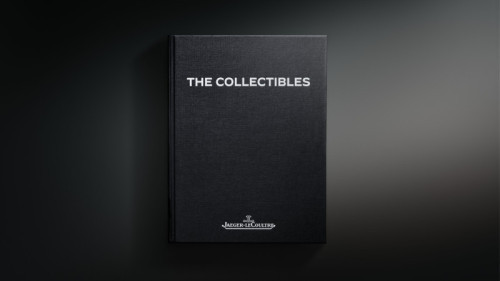
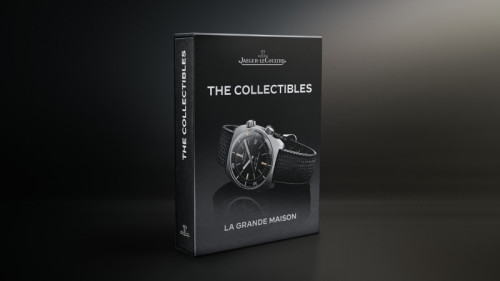
Every timepiece offered under The Collectibles programme is presented with an extract from the Jaeger-LeCoultre archives and a complimentary copy of The Collectibles, a reference book covering the 17 most emblematic models produced by Jaeger-LeCoultre during the mid-20th century. The book places these timepieces in their historical context and provides detailed information essential to collectors.
Each timepiece is also offered with a new, handmade leather strap, chosen to complement the style of the watch, except in cases where the model is fitted with a metal bracelet. In addition, when available, the original box and papers, together with the original strap or bracelet, are included.
NEW YORK TO HOST THE PRESENTATION OF THE COLLECTIBLES CAPSULE VIII
The eighth capsule collection of The Collectibles will be presented from 6-20 November 2026, in Jaeger-LeCoultre’s flagship boutique at 701 Madison Avenue. Opening hours are from 10 AM to 6 PM. The Collectibles timepieces will be available for purchase worldwide via jaeger-lecoultre.com from November 6, as well as at the New York Flagship during the presentation period.
The Collectibles book is available via jaeger-lecoultre.com and at all Jaeger-LeCoultre boutiques.

Downloads

|
|
|
|
|
|
|
|
|
|
|
|
|
|
|
|
|
|
|
|
|
|
|
|
|