INTRODUCING CALIBRE 101 CHAIN
A BOLD NEW CONTEMPORARY DESIGN IN 18K PINK GOLD, WHITE DIAMONDS AND GLOSSY BLACK HYCERAM®
KEY FACTS:
The shape of feminine watchmaking: a noble jewellery watch legacy harnessed to mechanical sophistication and aesthetic creativity with a unique bangle design
Blending tradition and technology: classical jewellery codes combined with innovative and modern materials
The mastery of miniaturisation: the world’s smallest rectangular manually wound mechanical movement, Calibre 101, showcases precision and technical expertise
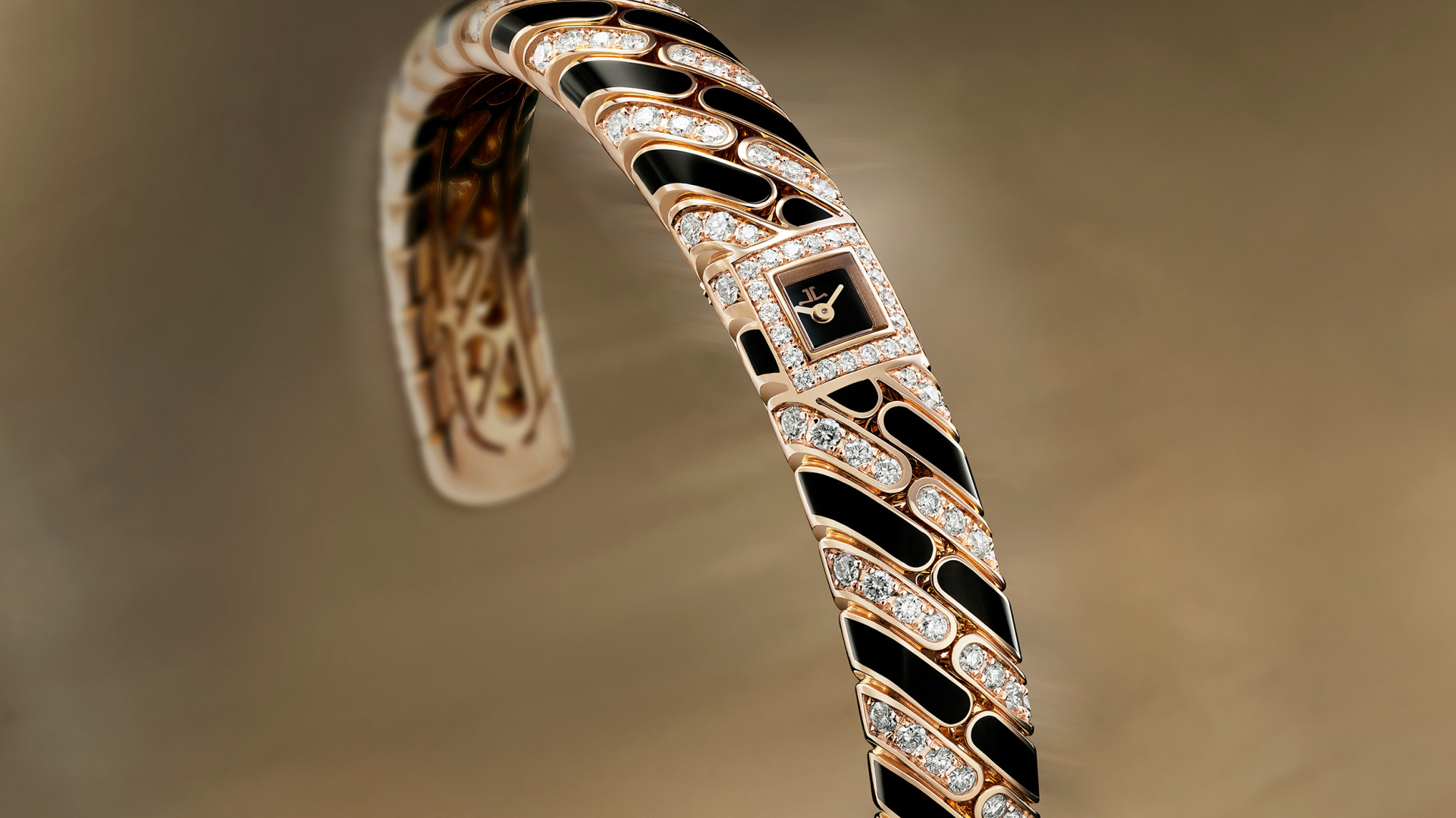
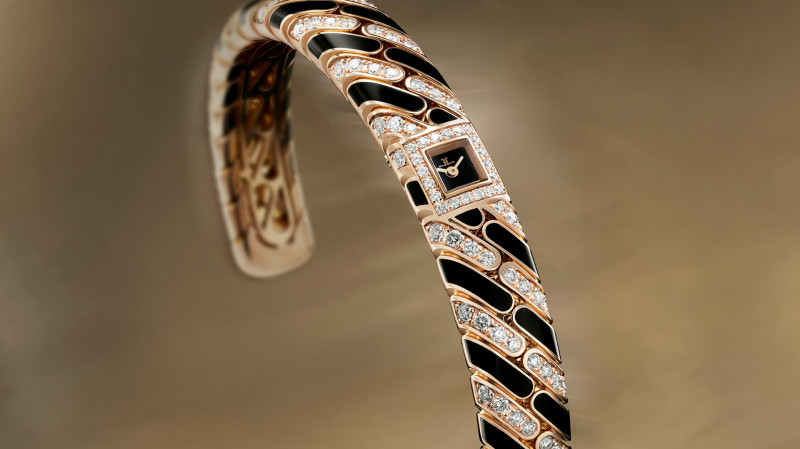
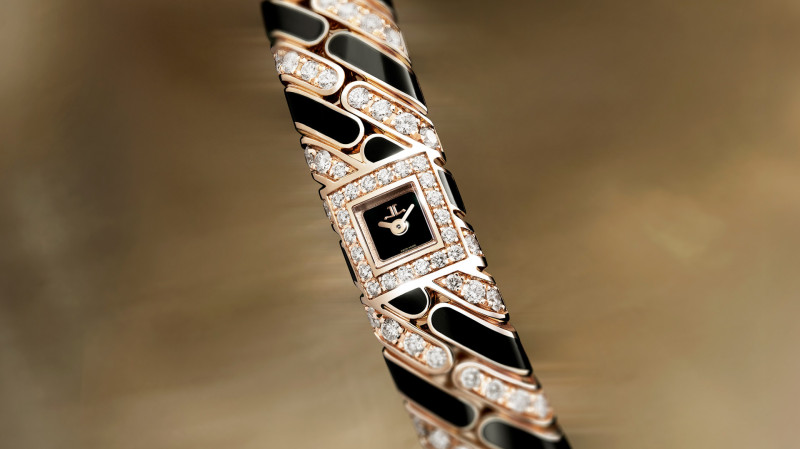
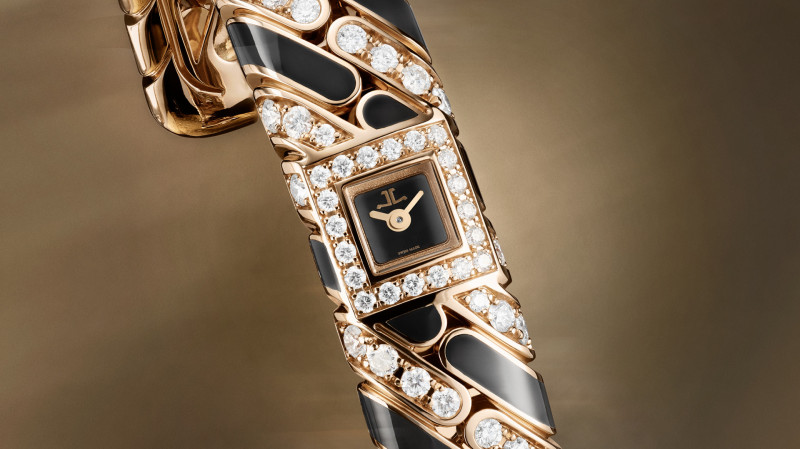
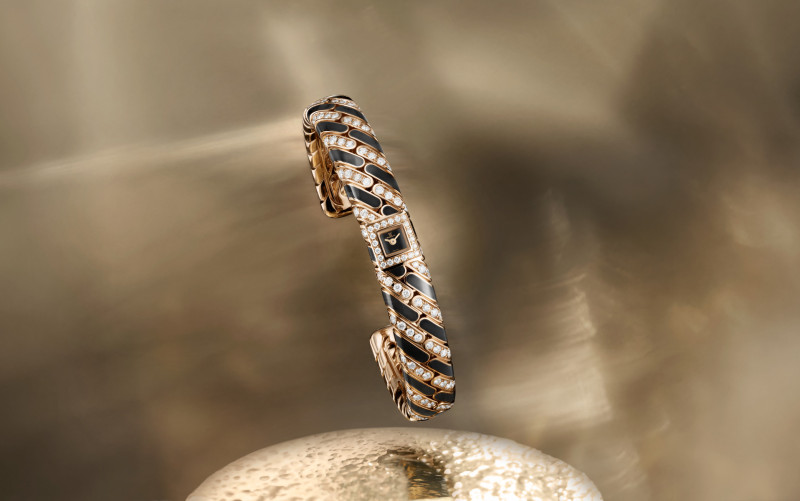
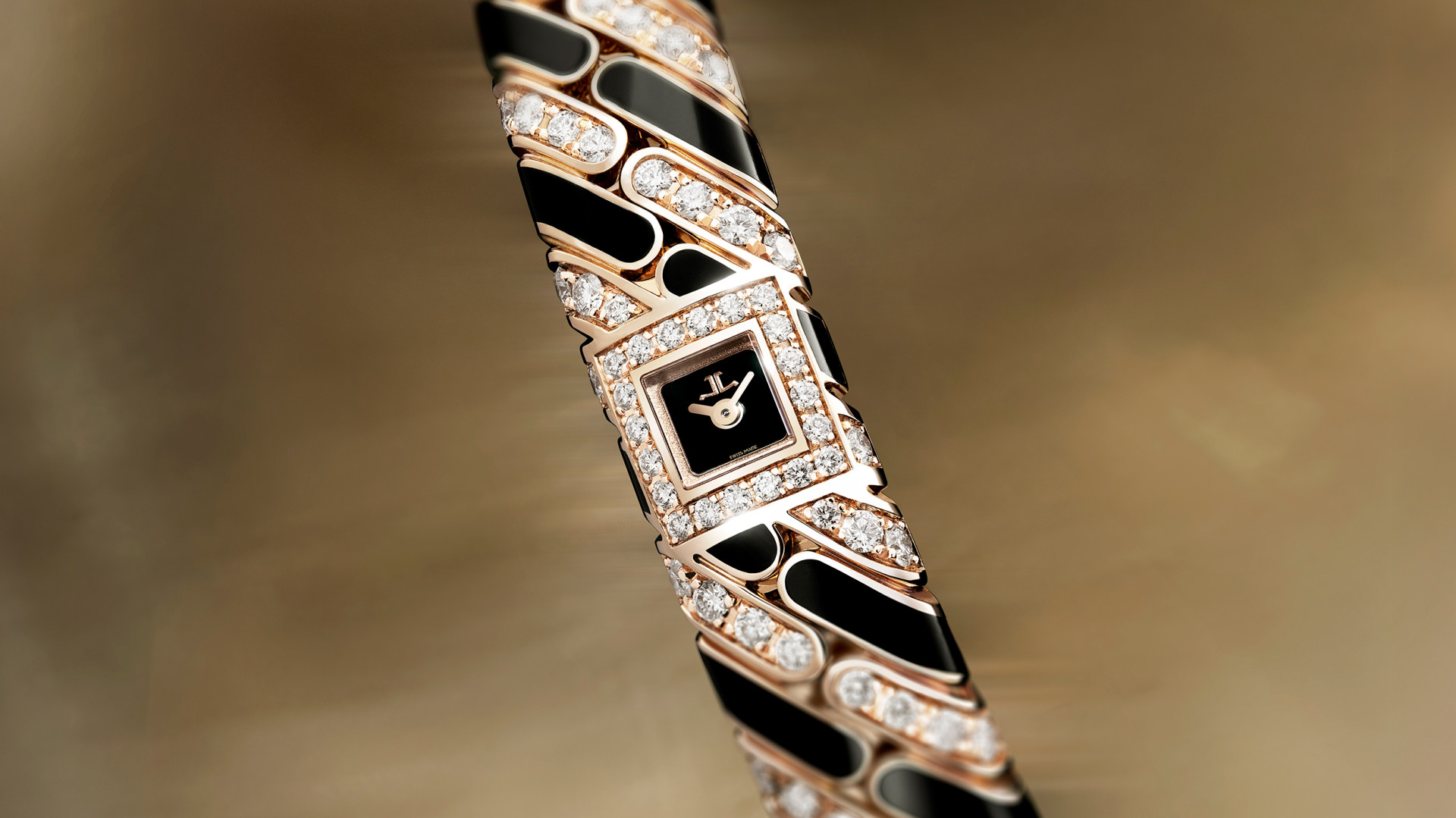
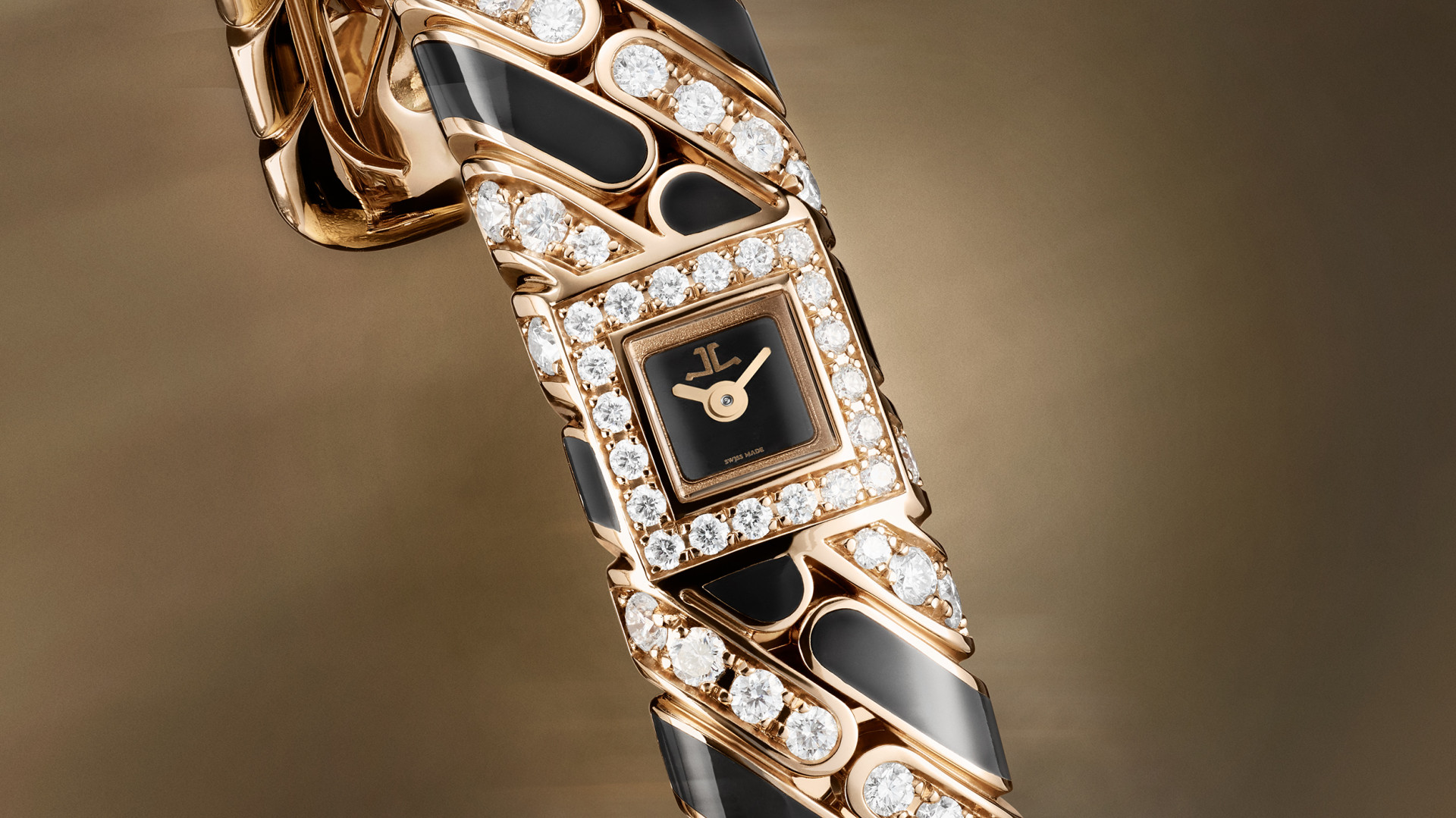
Enriching the Calibre 101 series of High Jewellery watches with the new Calibre 101 Chain, Jaeger-LeCoultre reaffirms the unique alliance between High Jewellery and fine watchmaking made possible by this exceptional mechanism. The world’s smallest rectangular manual-winding mechanical calibre forms the centrepiece of a sculptural bangle of 18K pink gold (750/1000) set with diagonal bands of brilliant-cut white diamonds alternating with bands of deep, glossy black HyCeram® to create a boldly contemporary ode to femininity.
CALIBRE 101: A LANDMARK IN THE QUEST FOR MINIATURISATION
The art of miniaturisation: Since the early 16th century, when clocks were first reduced to portable dimensions, the history of horology can be seen as a continuing quest for miniaturisation, as well as timekeeping precision. The fundamental challenge was to solve the conundrum that reducing the size of components almost invariably comes at the cost of robustness and reliability. From the mid-19th century onwards, Jaeger-LeCoultre became known for developing very small movements – ensuring that mechanical quality did not need to be sacrificed for the sake of aesthetics and ornamentation. Among its innovations were the diminutive LeCoultre Calibre 7HP, introduced in 1880 for small enamelled and gem-set watches; and LeCoultre Calibre 6EB, introduced in 1908, which measured barely more than 1cm square.
The Duoplan breakthrough: By the 1920s, as wristwatches began to overtake pocket watches, a dramatic change in lifestyles had brought new demands, including a taste for smaller watches and more creative designs. LeCoultre’s solution was the Duoplan. Invented and patented in 1925, it was a rectangular movement with a two-level architecture (hence its name). By setting the escapement on one plane and the barrel and cogs on another, it effectively halved the amount of space required by the gear train of a conventional calibre. Equally ingenious, the mainspring is wound by a flat crown set into the caseback. The LeCoultre Manufacture went further and in 1929, introduced Calibre 101. Built on the Duoplan architecture, it represents the apotheosis of the quest to marry accurate timekeeping with tiny dimensions.
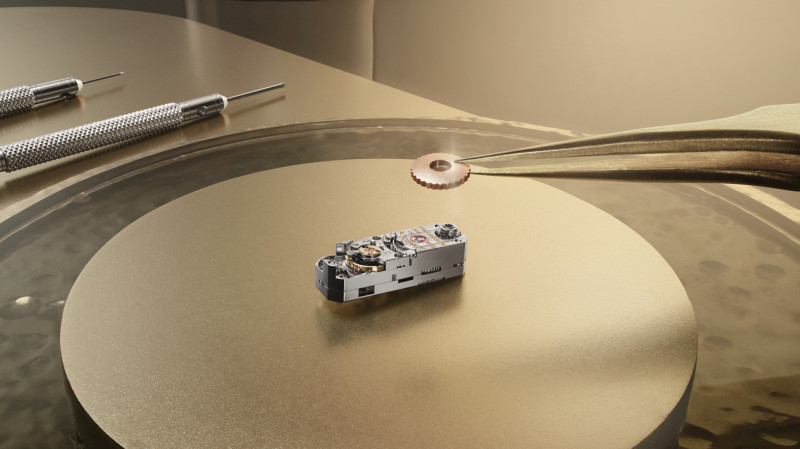
The world’s smallest rectangular manual-winding calibre: At 14 mm long, 4.8mm wide and 3.4 mm thick (a volume of just 0.2 cm3), Calibre 101 comprised 74 parts and weighed barely one gram – the weight of two butterflies. Its balance wheel oscillates at 21,600 vibrations per hour (3 Hertz frequency) and the mainspring provides a power reserve of 33 hours. Created without the benefit of computer-aided design, laser cutting and CNC machining – all of which were at least half a century in the future – it was a remarkable feat. Underlining its unique value in watchmaking, it remains to this day the world’s smallest rectangular manually wound mechanical movement. It is also one of the world’s oldest movements to have remained in continuous production and has appeared in jewellery watches created by Jaeger-LeCoultre under its own name, as well as by other great Maisons.
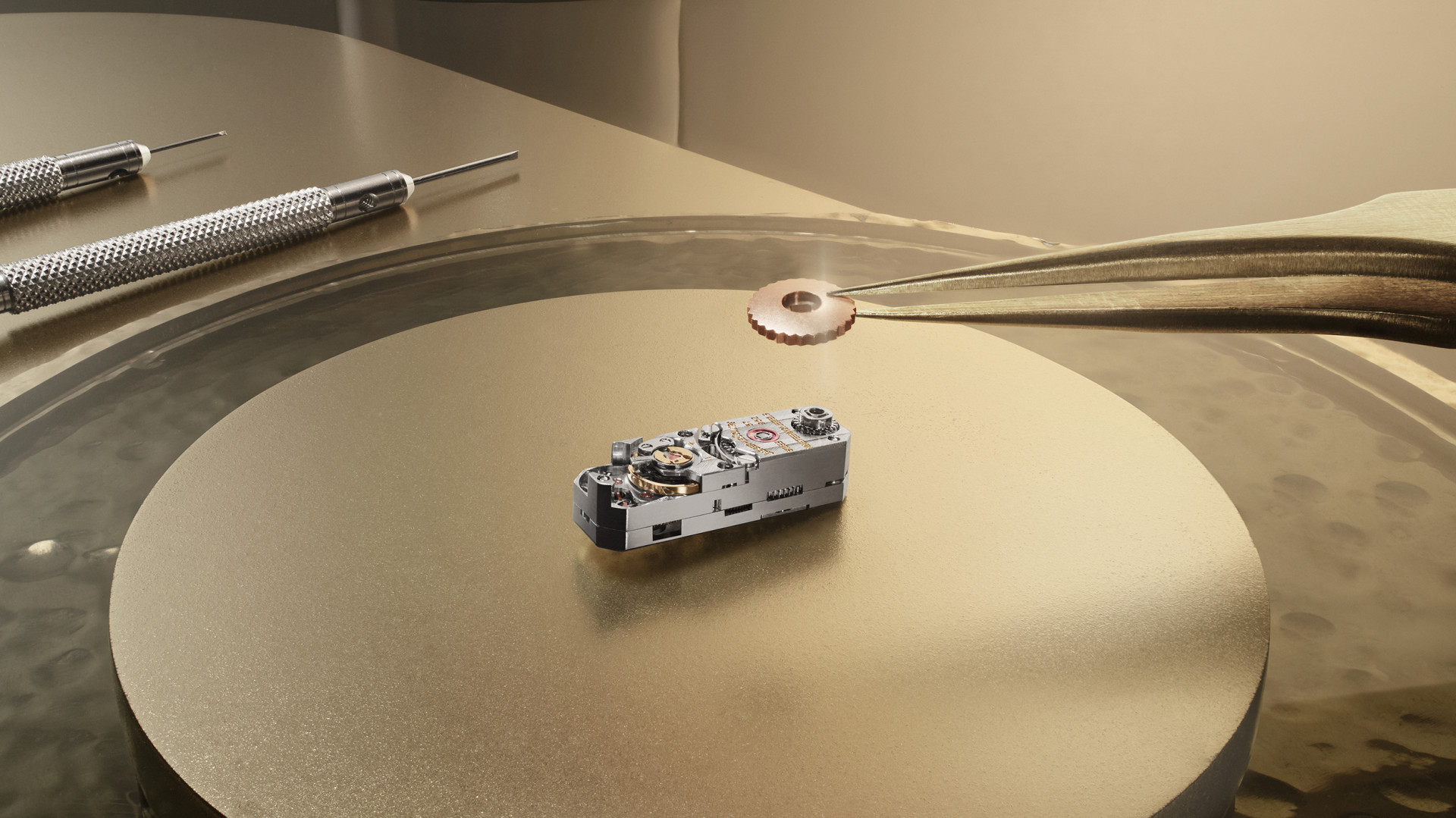
A legacy in precision: Over the past nine decades, technology has enabled improvements in materials, gear-train design and production techniques but the calibre’s dimensions and architecture remain unchanged. Now with 98 parts – all of which must be custom-produced and adjusted due to their tiny size – the current version of Calibre 101 represents the fifth generation. Working in a specialised atelier dedicated to the calibre, only a handful of watchmakers have ever mastered the skills necessary to assemble movements at such a microscopic scale. Dexterity, extreme precision and great patience are required: it takes 40 hours to assemble the 98 components and production is, consequently, limited to only a few dozen pieces each year.
CALIBRE 101 CHAIN: A BOLD EXPRESSION OF CONTEMPORARY FEMININITY
Where jewellery meets time: The tradition of jewellery watches began in the royal courts of 18th- and 19th-century Europe, when portable timepieces were rare and potent symbols of privilege and wealth. Embellished by goldsmiths, lapidaries, enamellers, and gem-setters, the arts of horology and jewellery became inextricably linked. By the early 20th century, wristwatches were recognised as the most useful jewellery a woman could own. Harnessing the boundless creative possibilities of Calibre 101’s tiny dimensions, Jaeger-LeCoultre takes this legacy in a bold new direction with the Calibre 101 Chain. The new timepiece pays homage to a celebrated 1955 Duoplan model nicknamed ‘Chain’, which was designed with a braided chain bracelet of heavy, 18K pink gold (750/1000) polished links. The form of those links is echoed in the sculptural detail on the sides of the new Calibre 101 Chain bangle.
Inverting traditional watch design: The Maison’s Design department took a jewellery-led approach to creating this timepiece. Instead of starting with the case, they first designed the form of the bracelet, the style of the gem-setting, and the ornamentation – integrating the case and movement only at the very end. This beautifully inverts the traditional watch design process. The subject of more than 300 hours of technical research and development, Calibre 101 Chain is crafted according to classical High Jewellery codes, yet it allies these traditions with advanced materials technology in the form of HyCeram®– an intensely black, high-gloss ceramic composite.
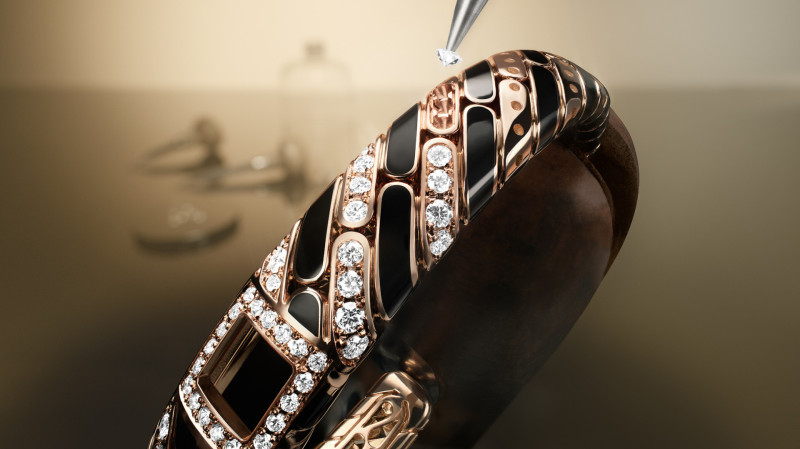
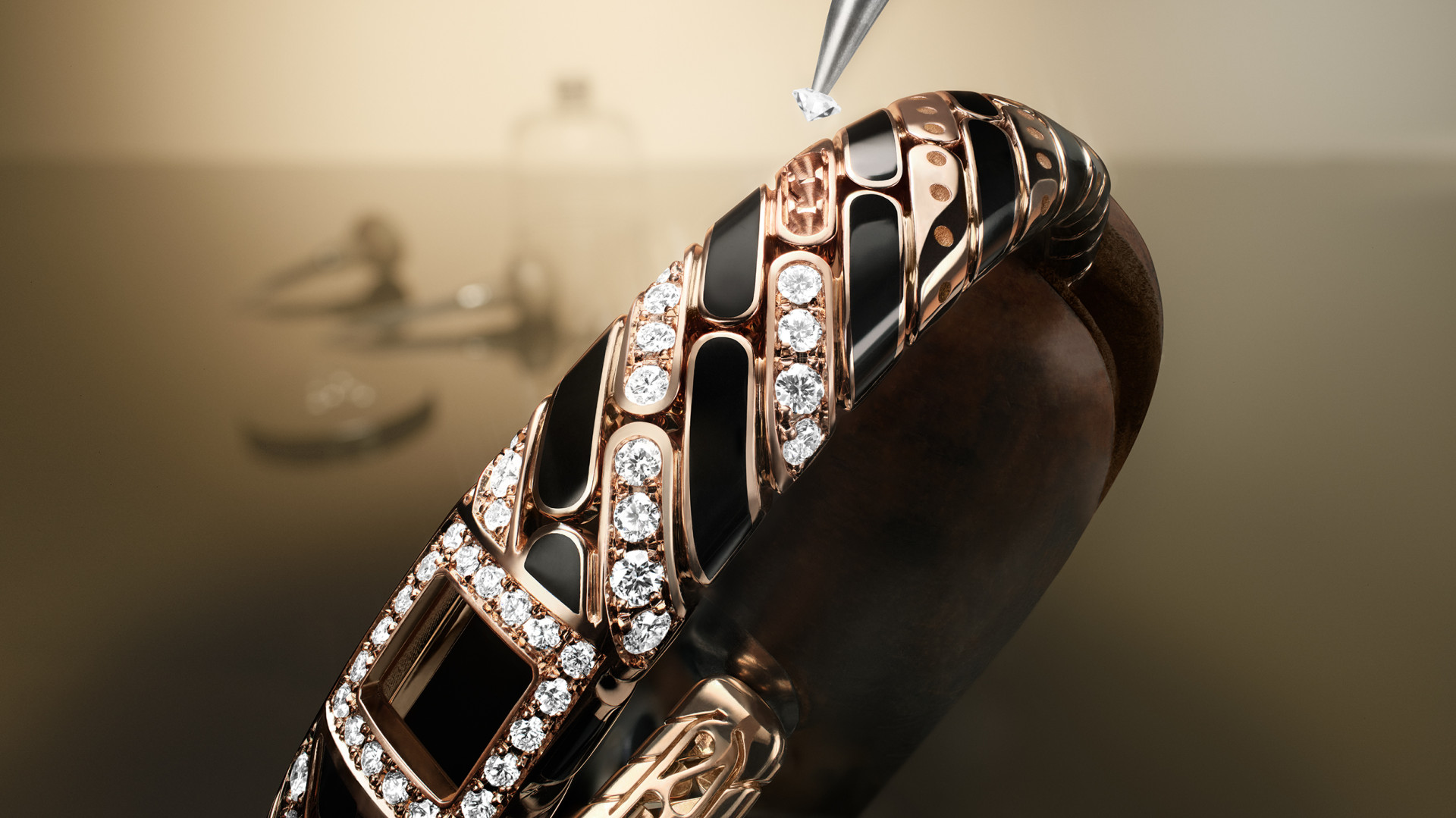
Sculpting gold and advanced ceramics: The piece is created through the casting of 18K pink gold (750/1000), using a unique mould made specifically for each individual timepiece and recreated for every watch. Once cast, the surface is meticulously refined: the 36 existing HyCeram® cavities are carefully finished to ensure fine, immaculate edges, before the openings for the diamonds are precisely drilled. Liquid HyCeram® is then carefully injected into the cavities using a hand-held syringe. Once the material is perfectly flush with the pink gold, it is cured through a precisely calibrated process of pressure and heat, followed by meticulous polishing to reveal its rich depth of colour and mirror-like reflection.
A celebration of creative freedom: The bangle is then passed to a master gem-setter in Jaeger-LeCoultre’s Métiers Rares™ atelier to hand-set 158 brilliant-cut diamonds. Finally, the diminutive watch, with its black lacquer dial and diamond-set bezel, is integrated into the bangle. Showcasing Jaeger-LeCoultre’s mastery of miniature watchmaking and high jewellery, the new Calibre 101 Chain is a joyful celebration of the creative freedom allowed by the legendary Calibre 101.
TECHNICAL CHARACTERISTICS
CALIBRE 101 CHAIN
Case: 18K Pink Gold (750/1000)
Dimensions: 18.60 mm x 5.98 mm x 6.75 mm
Calibre: Manually wound, Calibre 101
Functions: Hours, minutes
Power Reserve: 33 hours
Dial: Black lacquer
Gemstones: 158 diamonds (approximately 2.73 carats)
Strap: 18K Pink Gold (750/1000), HyCeram®, brilliant-cut diamonds; wrist size 160–165 mm
Reference: Q2842270